
On the Antarctic continent, the use of renewable energy is particularly attractive insofar as reducing fossil fuel consumption not only cuts all the logistics associated with fuel transport and storage, but also limits the risks of pollution — gaseous emissions — and accidental spills into the environment.
After reducing consumption, optimising efficiency and improving performance, the remaining challenge — through the development of systems using renewable energy — is to address energy production itself. The realistic exploitable sources for these sites are the sun (direct production of electrical or thermal energy) and the wind (potential mechanical energy).
Even a low-capacity installation is worthwhile, since every kWh produced is a free kWh. Initially, renewable energy installations can complement conventional fossil fuel systems, then, as these technologies mature, take over and become the primary production installations.
The fossil fuel consumption of Dumont d’Urville and Concordia is amongst the lowest of Antarctic stations of comparable size, thanks to the careful and integrated management of electrical and thermal needs — cogeneration systems, load shedding devices, individual room temperature control, and electrical load limiting.
There is no universal solution, but there are solutions suited to specific environmental conditions. The conditions at Dumont d’Urville indicate that wind power appears better suited to this site, whereas Concordia lends itself more readily to systems exploiting solar radiation. As a first step, renewable energy projects aim to meet peak demand during summer periods. The goal is to become familiar with this equipment and to supplement diesel power generation — not, for the time being, to replace it.
Technical choice
For this first installation, the choice was made to use a medium-power vertical axis wind turbine based on the Darrieus principle (as opposed to the Savonius principle). Vertical rotors have the advantage of turning slowly — remaining visible to bird life — and being mechanically simpler: no variable pitch, no orientation required. The Ropatec Megastar 20 kW model was selected.
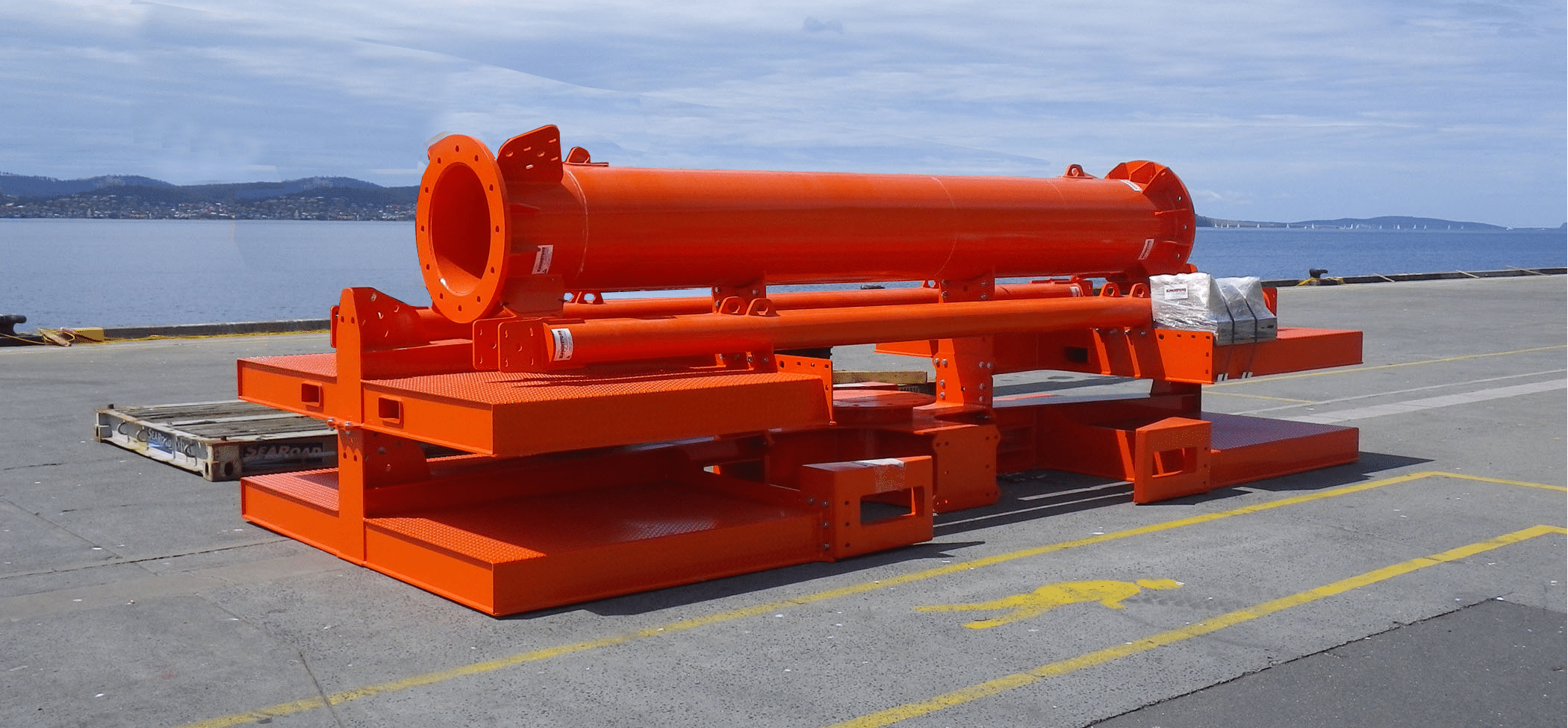
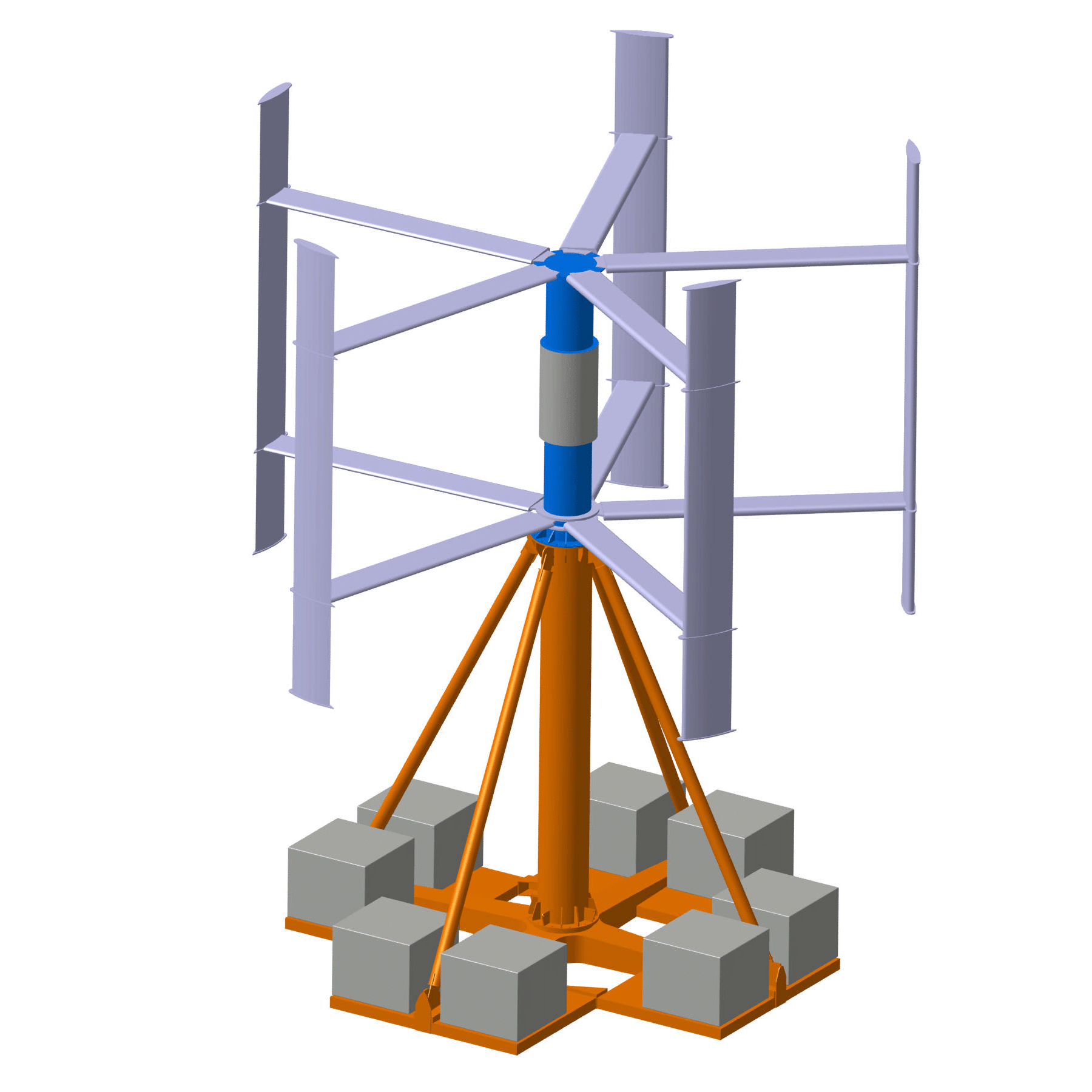
This machine is of a size and weight compatible with the handling equipment available at the chosen installation site — the Lion platform. A larger machine would have required a crane more costly than the wind turbine itself. For the same reasons, the machine is installed on a short mast mounted on a removable platform rather than on a mast anchored in the ground. The platform is secured by eight concrete and steel counterweights of 4 tonnes each. The wind turbine can thus be relocated and reinstalled should its position need to be changed.
Ropatec Megastar wind turbine specifications
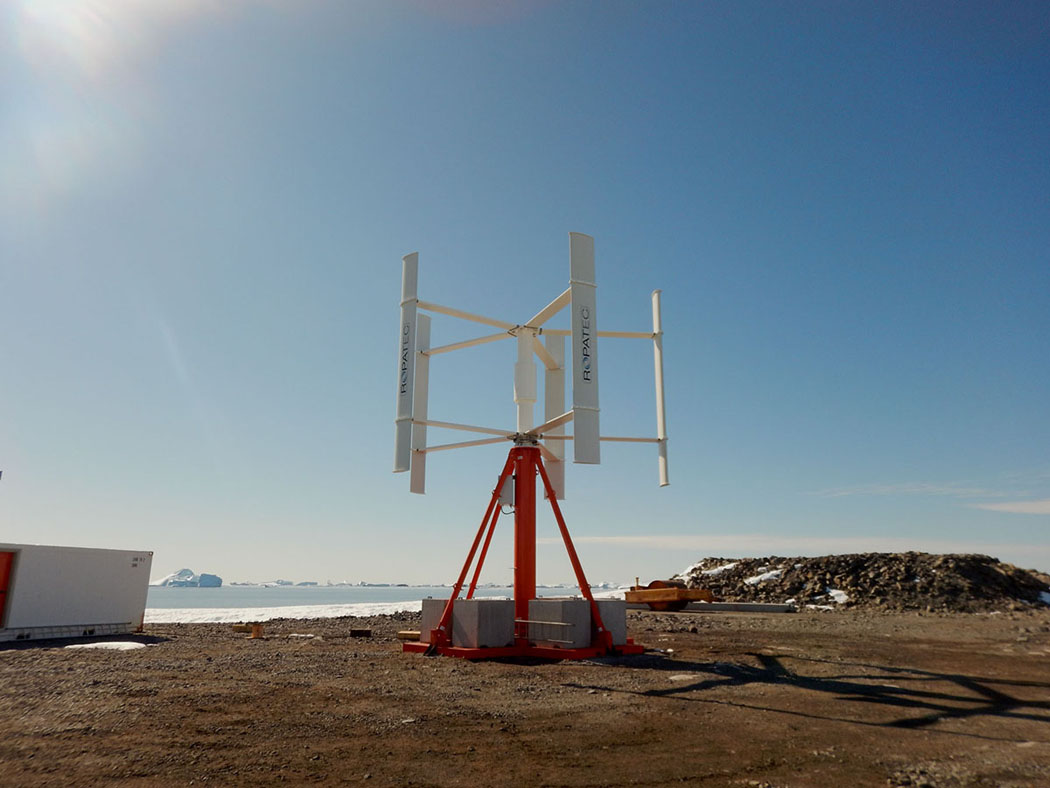
Vertical axis wind turbine Ropatec 20 kW
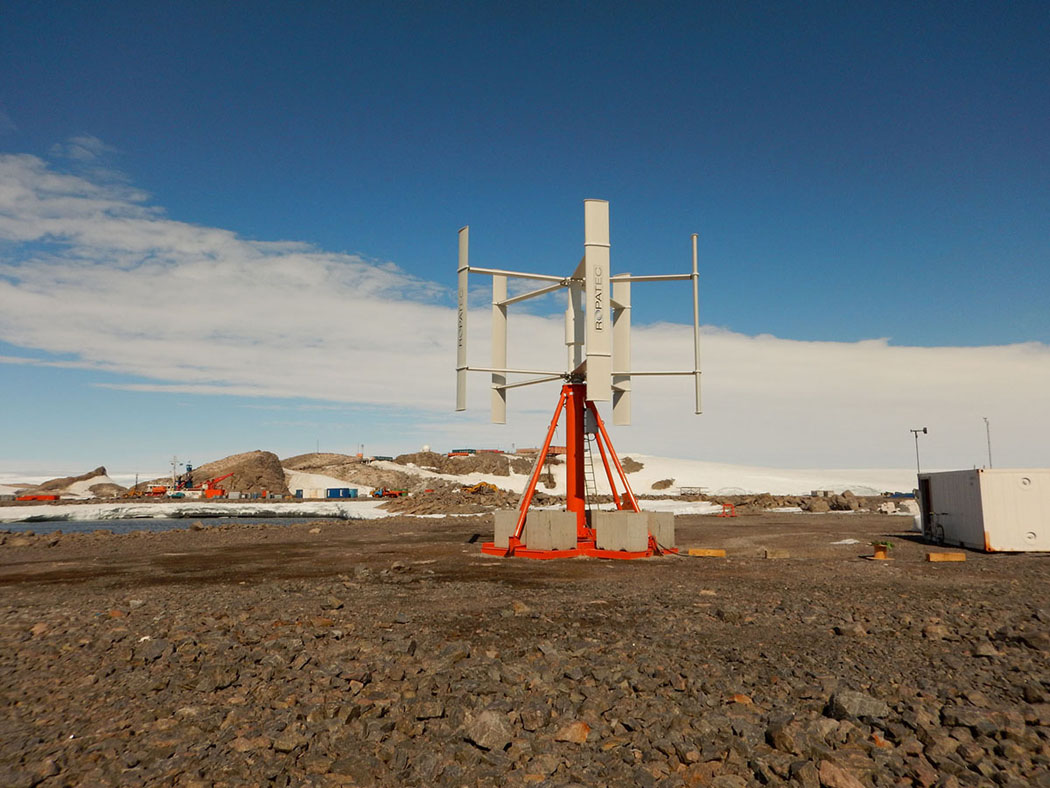
Vertical axis wind turbine Ropatec 20kW
The maximum rotation speed is 90 rpm; the five vertical blades measure 680 × 5,828 mm. This size and low rotation rate allow the turbine to remain visible. The effective wind speed range is between 5 and 20 m/s. Full production is reached at 11 m/s. The electrical brake is activated above 20 m/s, the alternator decouples, and the hydraulic brake holds the machine at a standstill. Should a fault occur (anemometer failure, electrical fault, unplanned grid disconnection…), the hydraulic brake stops rotation by default on loss of current. The overall height at the base is 9,959 mm, with a rotation diameter of 8,200 mm and a mass of 3,700 kg.