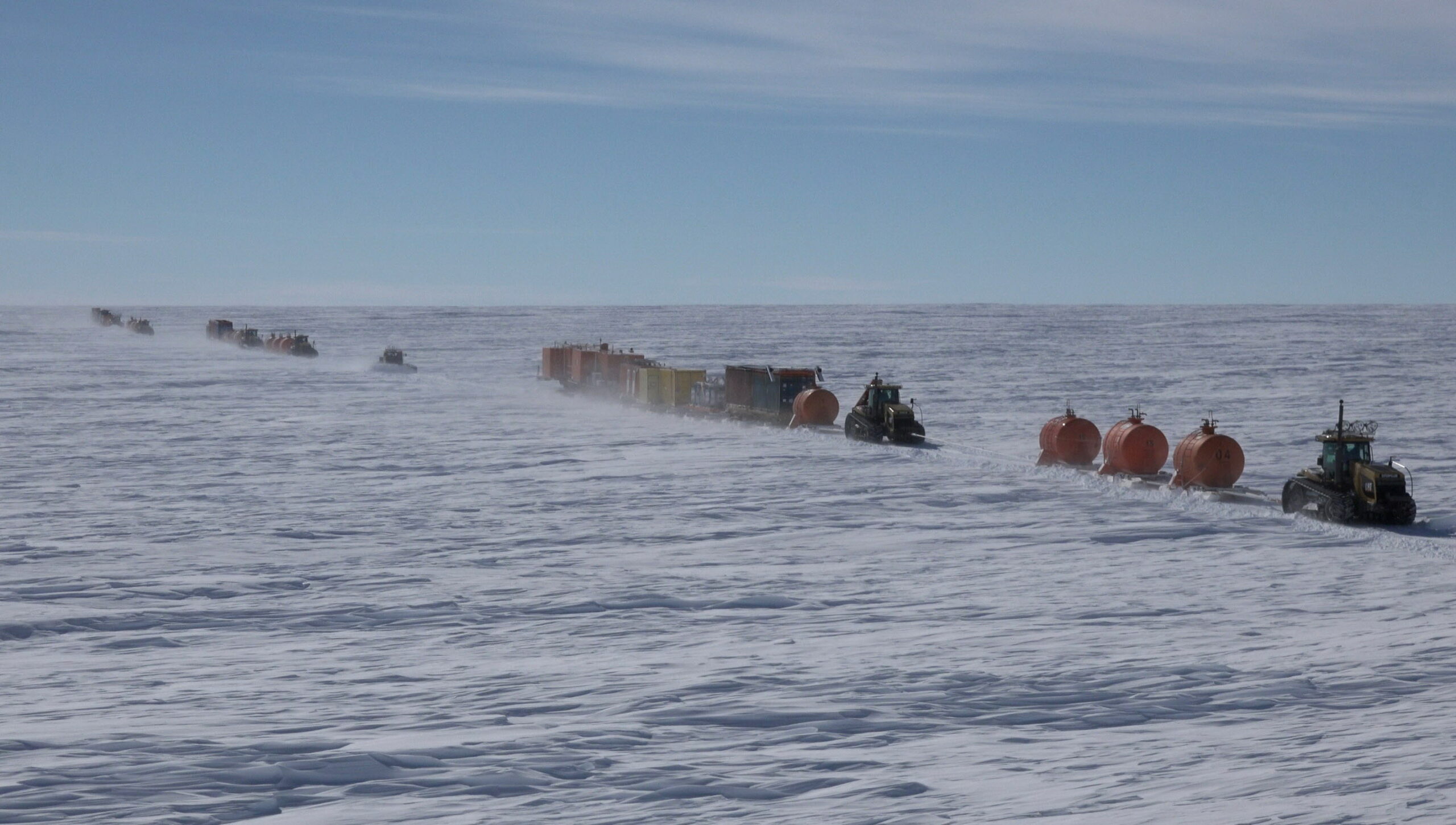
The construction of Concordia required the transport of approximately 3,000 tonnes of equipment and consumables (4,000 tonnes including the EPICA deep ice core drilling programme, which was completed in 2003), while the current annual resupply represents around 500 tonnes per traverse season. The success of the project was directly dependent on the ability to deliver this volume of cargo on time and at the best possible cost.
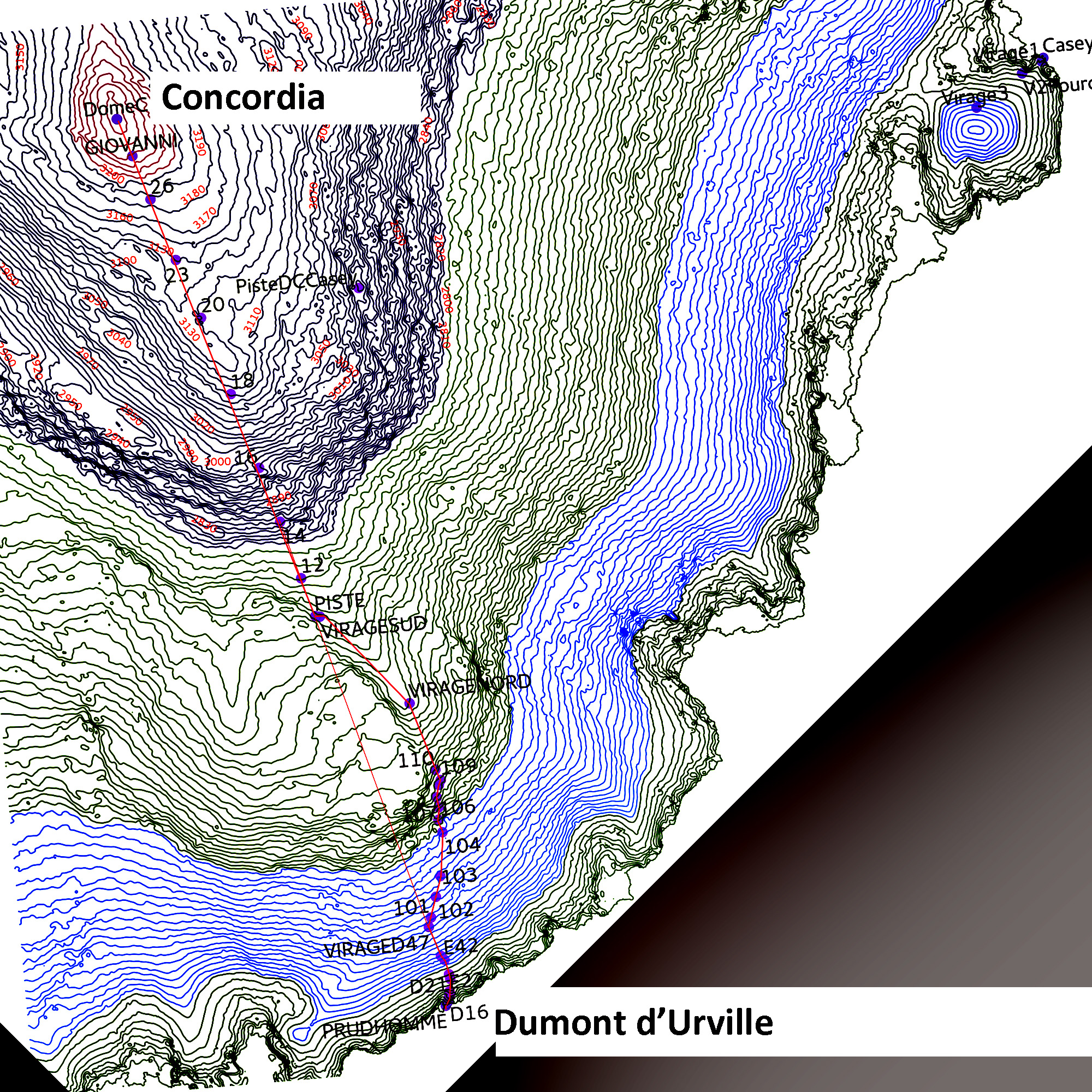
To achieve this, an overland transport system across the ice sheet was developed and funded by IPEV and its partner ENEA-UTA, linking Dumont d’Urville / Cap Prudhomme to the Dome C site (2,300 km return by surface route). Cargo is shipped by sea from Hobart (Tasmania) to Dumont d’Urville, then transferred to Cap Prudhomme either over the sea ice in winter or by barge in summer. Cap Prudhomme is the coastal Antarctic location where access to the continent is most straightforward. It is the traverse assembly point, and a support base camp has been established there. The traverse system carries out 2 to 3 return trips to Dome C during the austral summer.
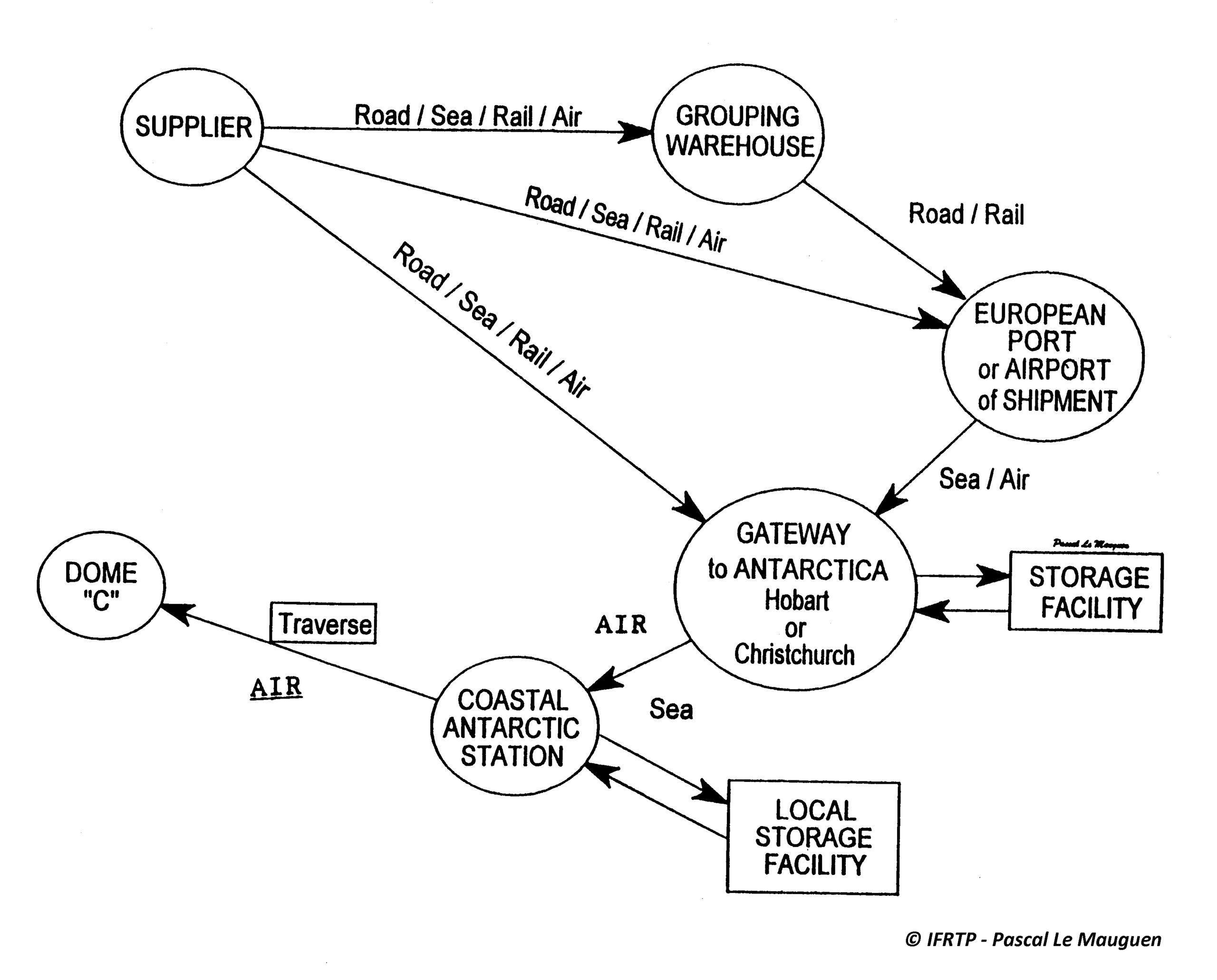
Organising convoys across the Antarctic ice sheet is not something that can be improvised — it remains a highly specialised undertaking. As shown in the diagram below, the polar traverse represents the final leg of a global supply chain that begins in the workshops and warehouses of equipment manufacturers. This situation calls for a commitment to results — or at the very least to means. Cargo must be delivered on time, in good condition, at the best cost, and the operation must be repeatable at the required frequency.
The remoteness of the worksite demands thorough planning. There are first technical choices to be made: load-carrying vehicles, towing vehicles, or both; carried versus towed loads; and ground pressure management.
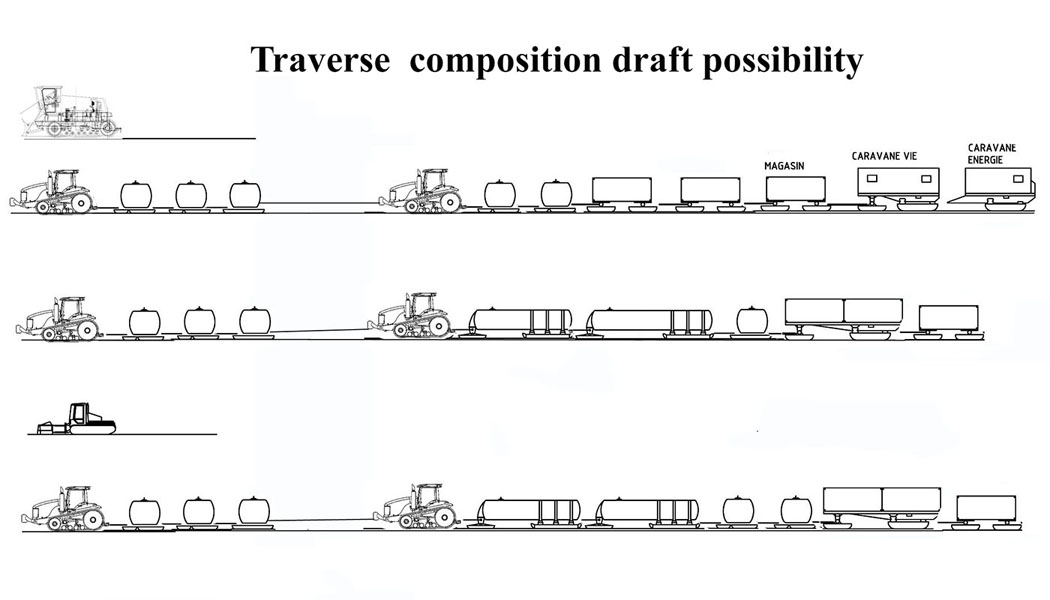
Typical Traverse Train assembly
In parallel, it is necessary to:
• manage personnel-related aspects: what training, what skills? daily living conditions (meals, accommodation, hygiene, comfort), the daily driving schedule, maintaining group cohesion, safety considerations, and communications.
• manage surface-related aspects (levelling, compaction),
• address navigation and weather management as at sea (positioning, orientation, route-finding, avoiding adverse weather conditions),
• work efficiently and methodically: that is, acquiring the skills of a new trade, organising the convoy and its maintenance, planning handling operations, choosing and adopting a consistent packaging system from one end of the supply chain to the other to avoid load breaks and unnecessary unpacking, determining the train assembly, and paying close attention to the environment in accordance with the Madrid Protocol and its annexes.
Choice of Vehicles
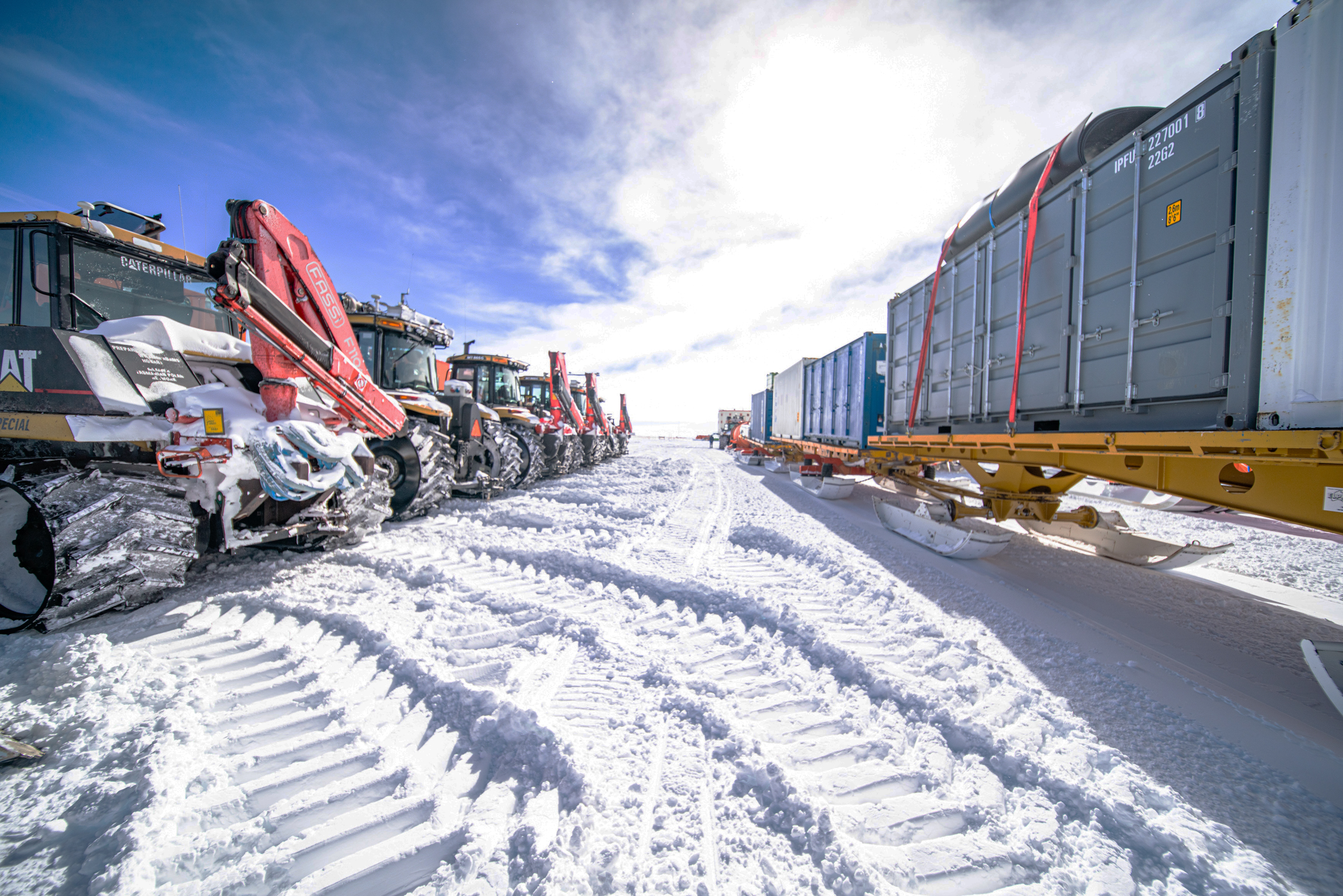
Among the available options, the choice settled on a combination of tractors and grooming vehicles: the Caterpillar Challenger series tracked tractors and the Kassbohrer Pisten Bully (PB series) snow groomers.
The first tractors put into service were the Caterpillar Challenger C65. When the fleet was renewed 18 years later, the choice moved to the AGCO MT 865x series, following AGCO’s acquisition of Caterpillar’s Challenger division. For grooming, the Kassbohrer PB 330 and then PB 300 series were selected. Under load, both types of machines consume approximately 6 to 8 L/km of diesel fuel. Unladen, the Challenger’s consumption drops to 3 L/km.
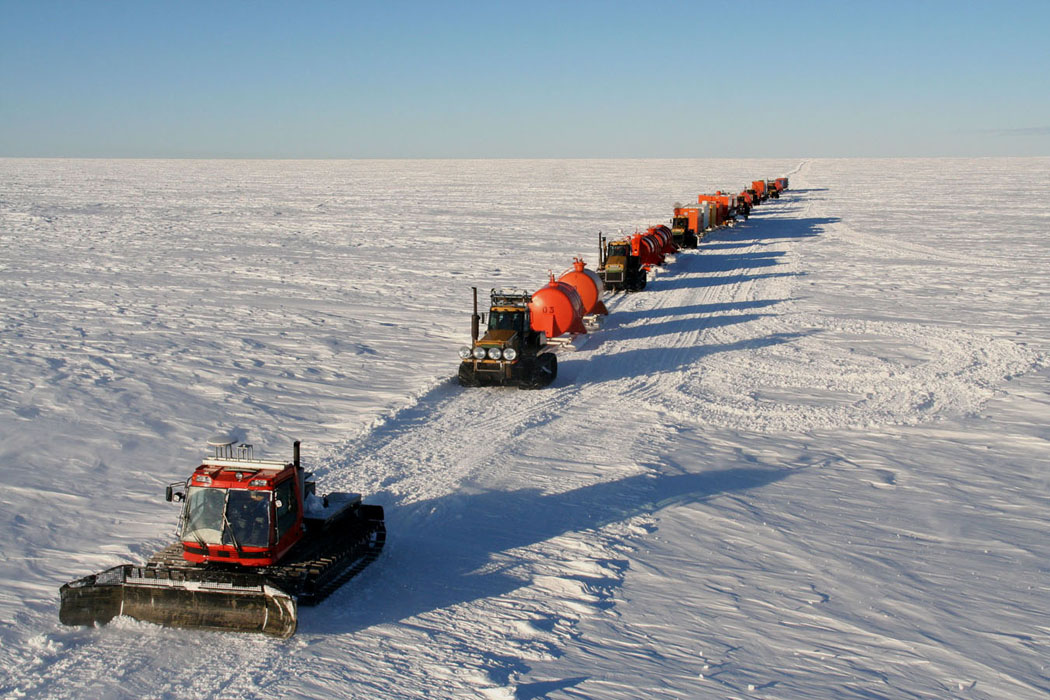
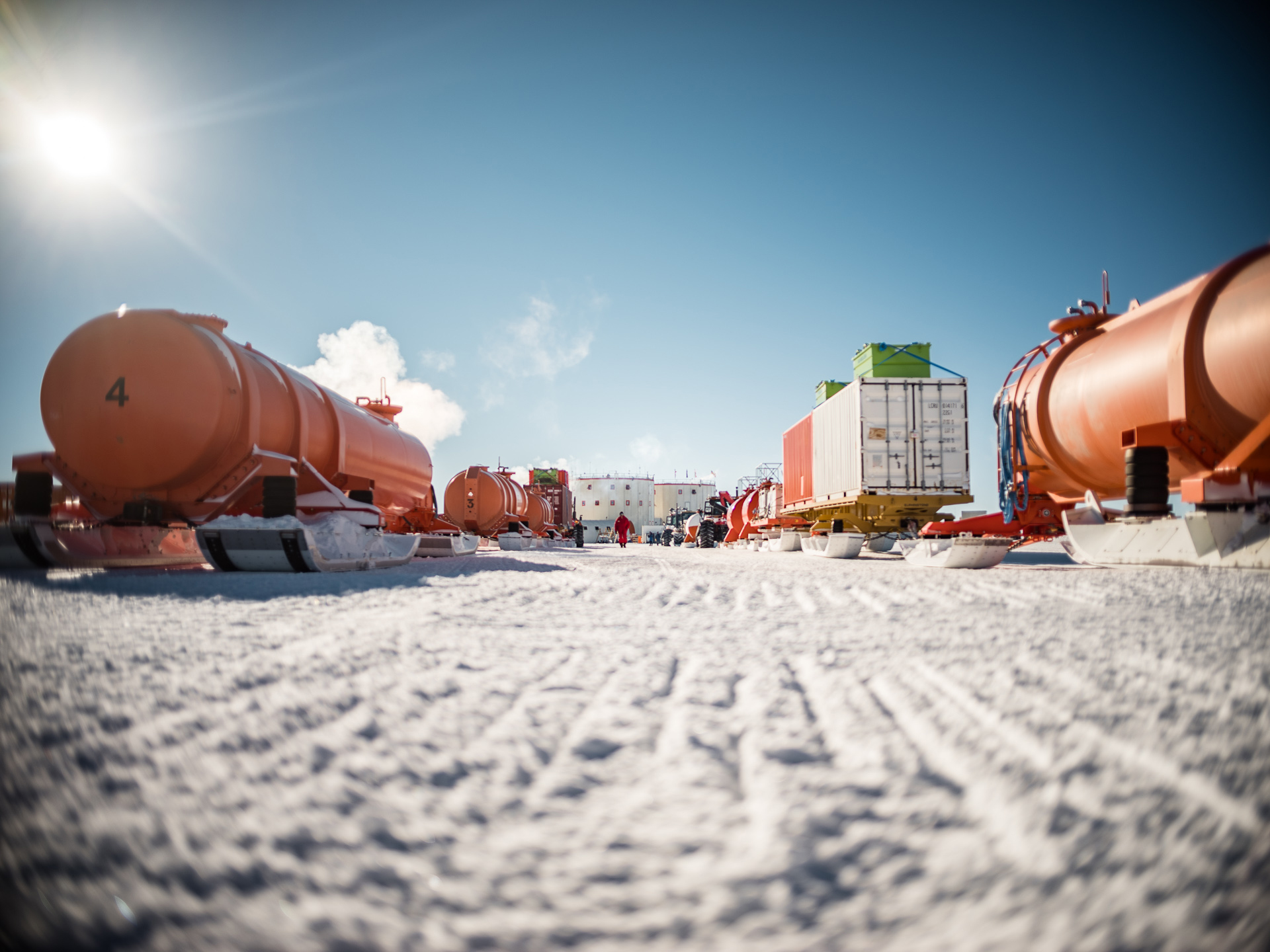
The Load – the Sledges
The traditional means of transporting loads over snow and ice is the sledge. As very few heavy-duty sledge models were available on the market, it was decided to commission equipment of our own design:
• A 12-tonne capacity dry cargo sledge, in two versions: a flatbed version and a 20-foot container carrier version.
• A 25-tonne capacity dry cargo sledge with a 12-metre deck, compatible with 40-foot containers.
• Three models of fuel tanker sledges dedicated to fuel transport, the most commonly carried cargo on traverses. One with a 12 m³ capacity dedicated to traverse fuel. A second with a capacity of 26 m³ increased to 32 m³, used for fuel destined for the station.
• A new model was also introduced: the pneumatic mattress sledge, and its evolution: the foam mattress sledge.
Other technical areas covered by the site’s pages: on-traverse accommodation, power generation, telecommunications, navigation, staging area equipment, food, and medical matters.
Personnel – Roles on the Traverse
The roles carried out on the traverse are: tractor driving, levelling, navigation, electrical systems, IT and communications, mechanical maintenance, and supervision.
The traverse team must be cohesive and tight-knit. Its members must genuinely work together. Staff turnover should be kept low while maintaining a sufficient pool of experienced traverse personnel. The challenge is building a pool of skilled and rigorous professionals, and avoiding a succession of candidates motivated solely by adventure with no regard for the team. Both professional and personal qualities are essential.
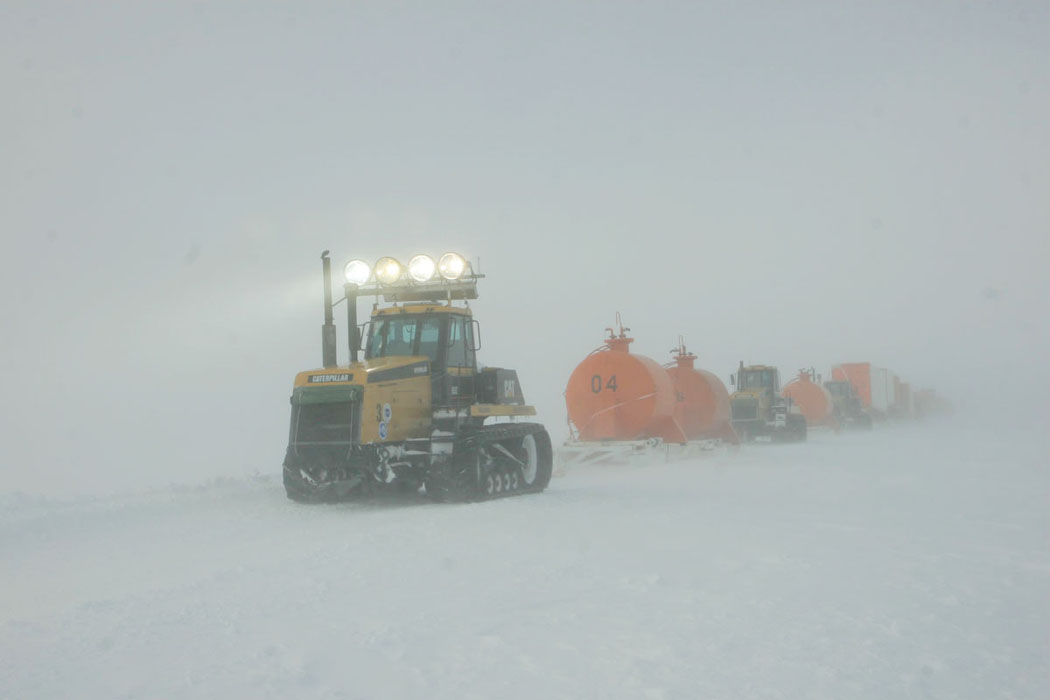
bad weather situation
There are other aspects of traverse operations not covered in the site’s pages (training, risk assessment, crevasse management, convoy operations, bad weather procedures, etc.). For any of these, please do not hesitate to use the contact form.