
Staff comfort matters. Staff involved in a logistics traverse supplying Concordia drive around 11 hours a day for a round trip that can last 26 days. Some of them will be on all 3 traverses of the season. They need to be able to rest, eat properly and live in good hygiene conditions. Early in the project, it was assumed staff would rest on bad-weather days. In practice, improvements in navigation and traverse organisation have all but removed weather-related stops. That variable no longer applies, which makes the need for regular, low-stress days even greater.
Staff on science traverses generally have less intense driving days, but they are away for much longer without support from a station, and spend more time using the facilities during stops for sample collection and other scientific work.
For safety and organisational reasons, the overall layout keeps living, technical and storage areas separate. A typical living unit includes an accommodation module, a module for power generation and water supply, and a storage module for food and spare parts.
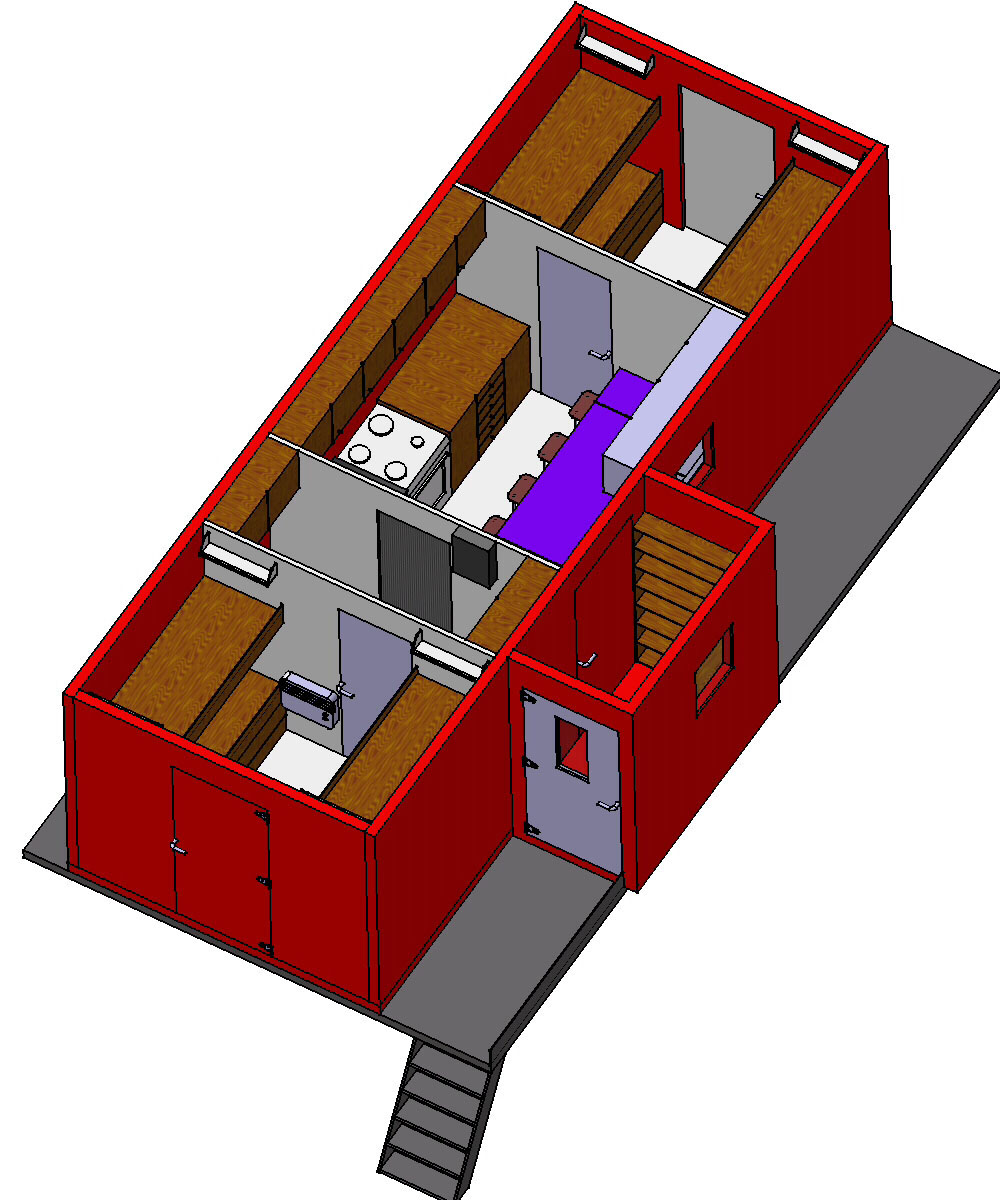
Lamberet living caravan view
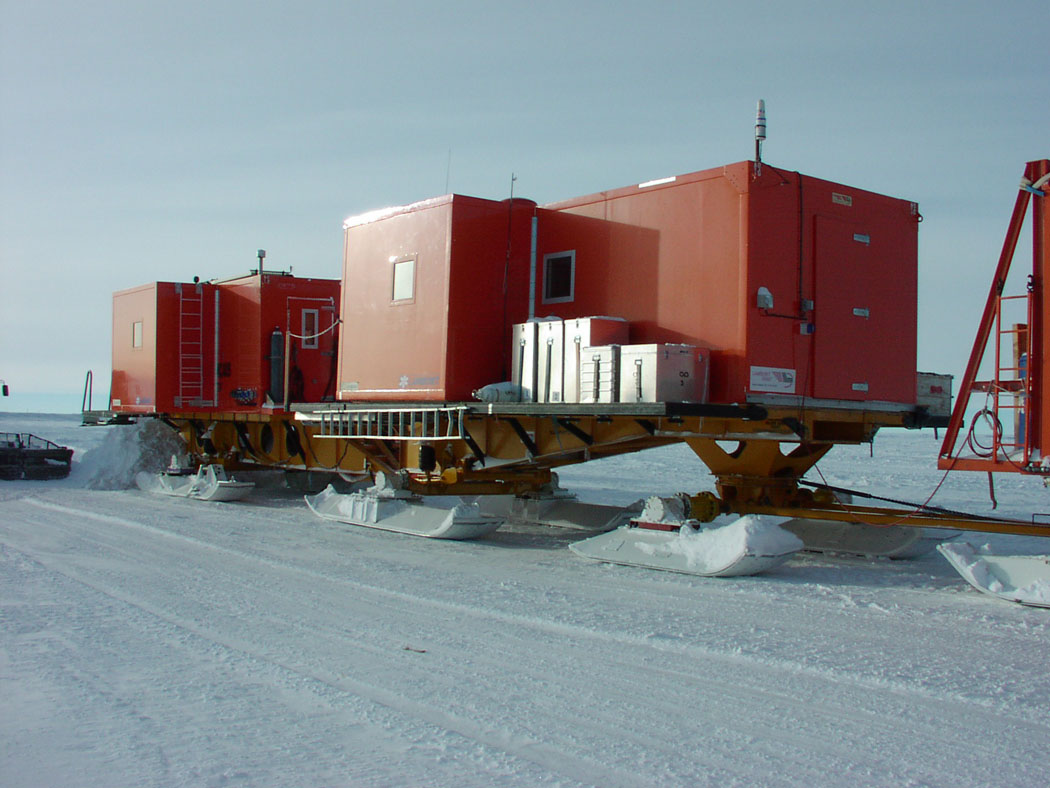
Living & power – Front view
• The accommodation module includes the mess and sleeping area.
• The technical module houses the generator and the system for melting snow and supplying drinking water. It also includes a workshop, a bathroom with shower, washbasin, electric incinerator toilet, urinal with tank, and washing/drying facilities. It also holds the traverse’s fuel station.
• The storage module includes a heated space for frost-sensitive goods and an unheated space for spare parts and frozen goods. Outdoor slabs complete the setup.
Unlike the Lamberet fleet, built from polyester sandwich-panel cabins, the IPEV fleet is built on a 20-foot container base. It comprises 4 units based on 20-foot and 6.6-foot steel containers. Insulation is achieved by lining the steel walls with 90mm sandwich panels.
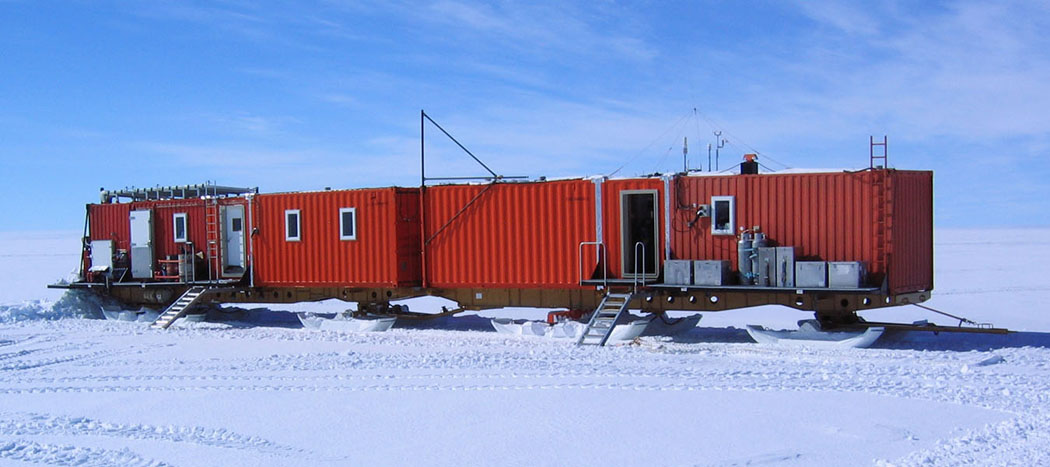
Living & power
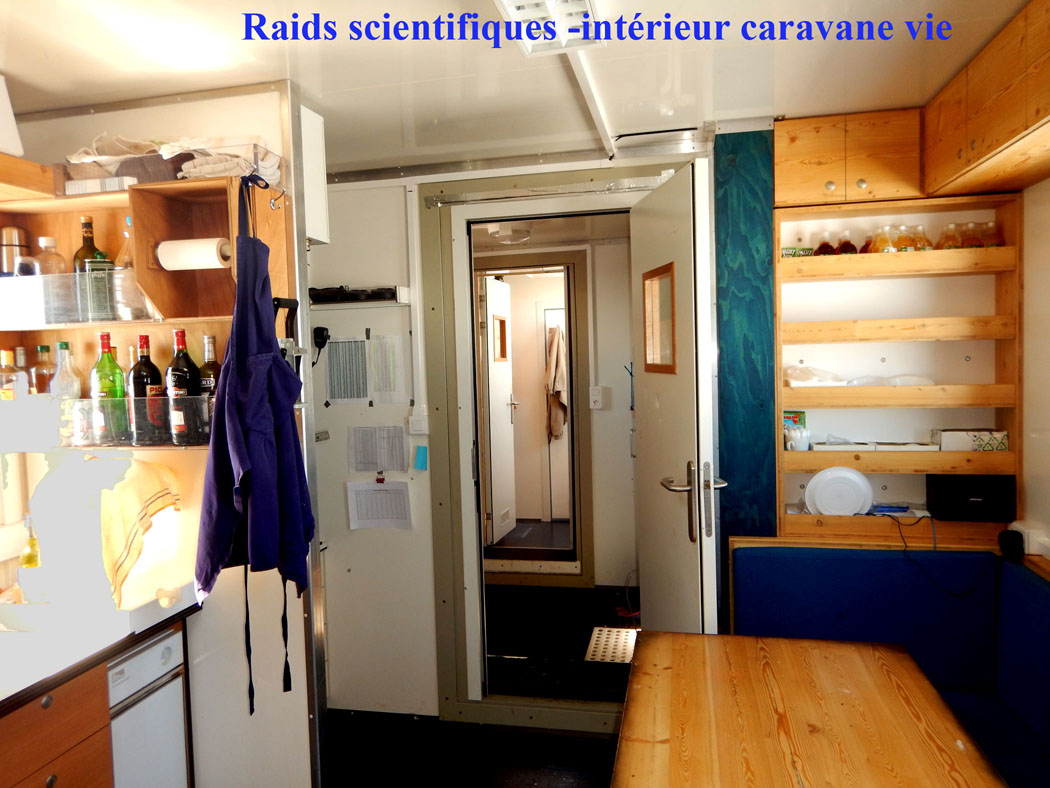
Living – internal layout
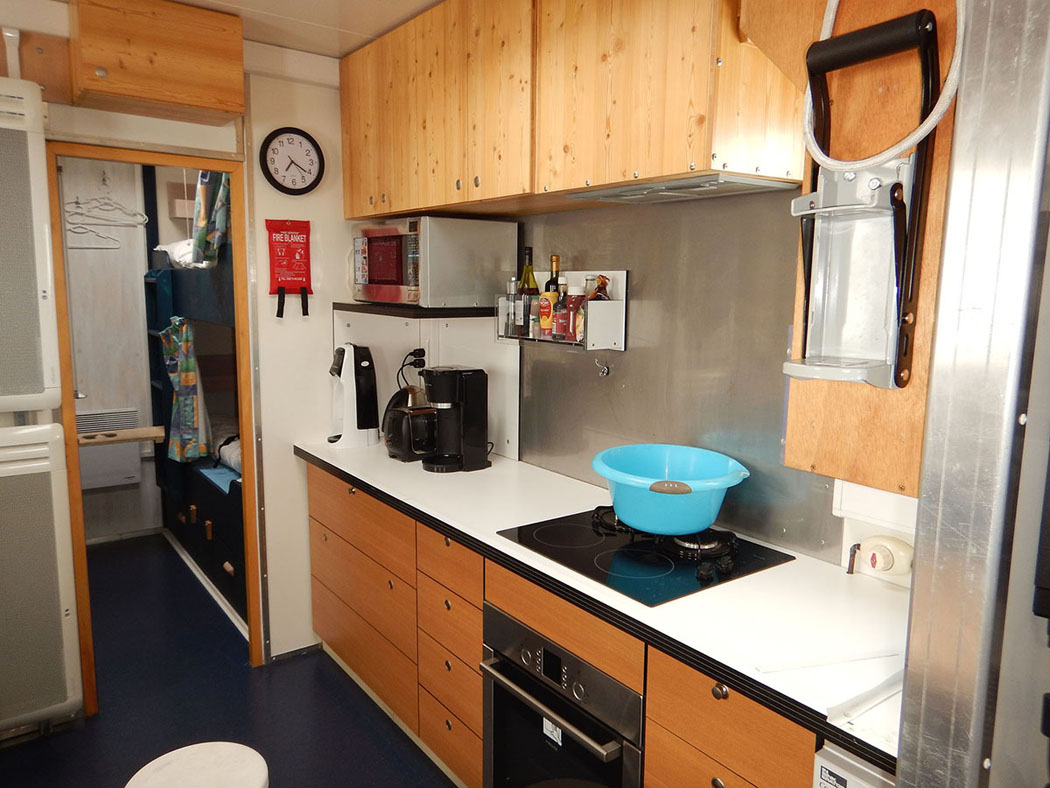
Living – internal layout
Living caravans
Caravans are sized to match the number of people working on the traverse. A caravan that is too small becomes impractical if extra staff join. A caravan that is too large uses more energy to heat and tow, and adds unnecessary load to the traverse.
The kitchen area is set up both for quickly thawing and reheating meals and for occasional traditional cooking. Meals are prepared in advance (in Australia) and delivered as frozen kits. Each meal kit includes disposable cardboard tableware, so washing up is limited to cookware and cutlery. Cutting down on dishwashing saves staff time and also has an environmental benefit, reducing wastewater discharge at each stop on the traverse.
The caravan fleet supplying Concordia was built in 1992 by the Lamberet company. It consists of a living caravan and a power caravan, both mounted on separate chassis and built from insulated sandwich panels as single-piece modules. The Concordia living unit sleeps 8 in the living caravan and 2 in the store annex.
The second caravan fleet, used for science traverses, was built between 2009 and 2011 at Dumont d’Urville, partly by wintering staff. It allows science-related trips to be organised on the continent independently of the Concordia traverses, and can also replace the Lamberet fleet during servicing. The science living unit sleeps 10.
The project also allows for a smaller caravan by combining the power unit with the living unit and its 4 berths on a single chassis. This single caravan could be used for local trips with 4 people.
Stores and extensions: the logistics traverse includes a heated van-style store extension and a 2-berth extension. The science traverse includes a store annex.
About the power caravans
The power caravans generate electricity using a diesel generator and produce water through a snow melter. The generator supplies the power needed for the whole unit and keeps tractors and groomers warm during stops. The melter and heating system run on waste heat from the generator set. Although they differ in some respects, the power modules on the logistics and science fleets are similar, with the science power unit being a compact version of the Concordia logistics unit.
Power caravan – logistics traverses
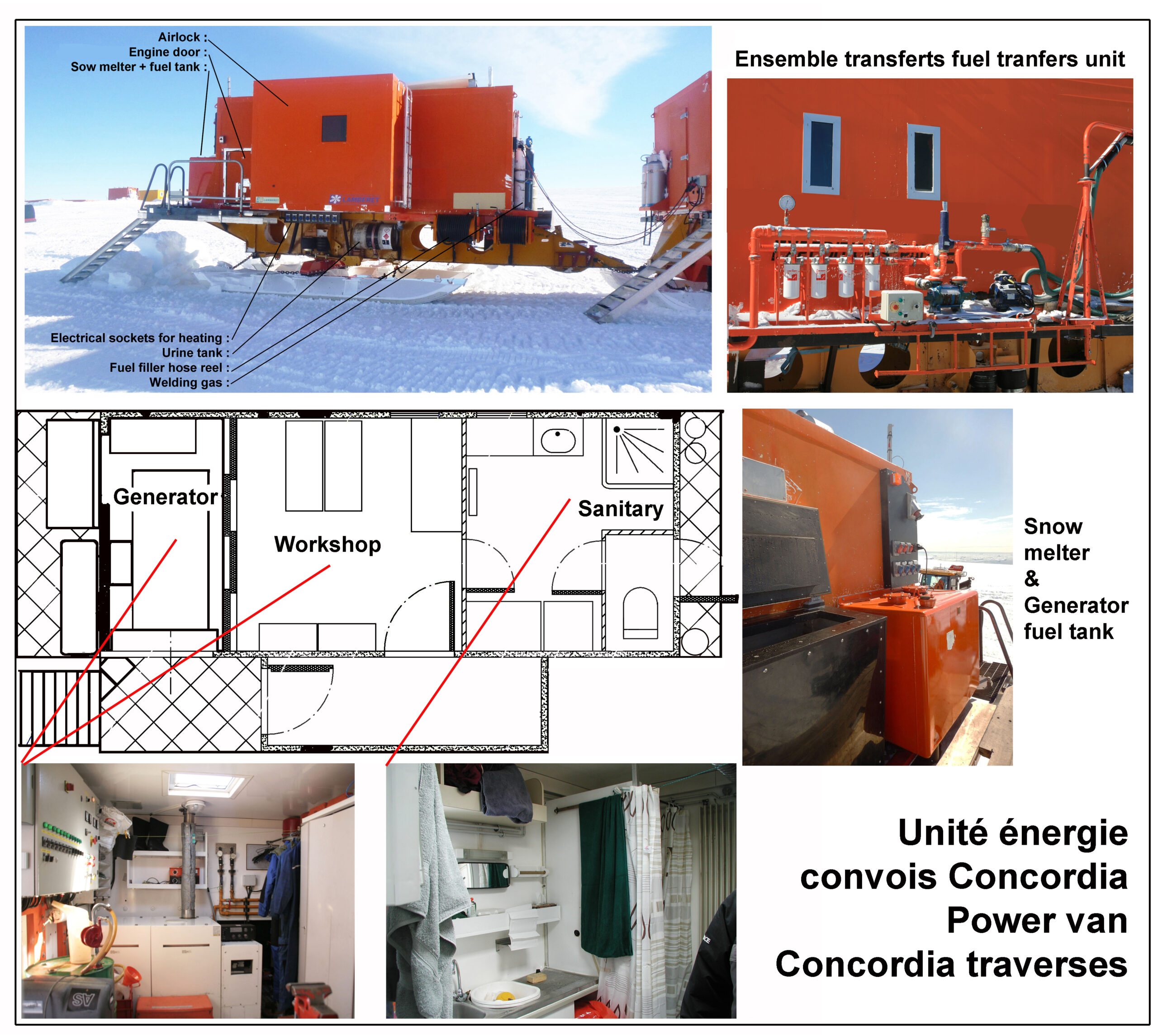
Lamberet energy unit details
Power caravan – science traverses
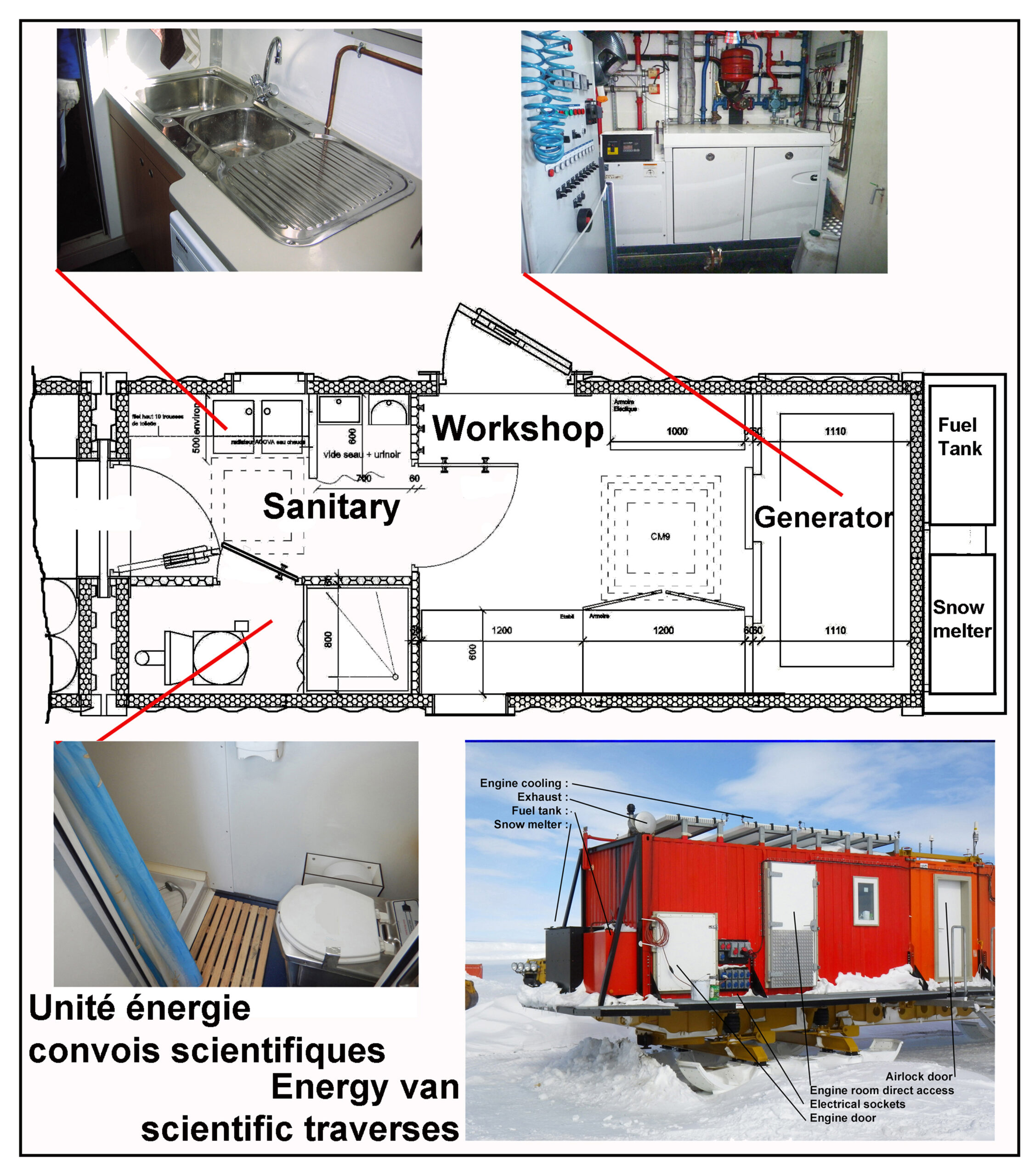
Energy caravan details