
The idea of establishing a base at Dome C first emerged within the French scientific community in the late 1970s. The first technical studies were published in the late 1980s and the project took shape in the early 1990s. The first traverse, departing from Dumont d’Urville / Cape Prudhomme, reached the site in November 1993. Equipment procurement and expeditions followed, and the first summer season — dedicated to building the camp and drilling facilities — got underway in the 1997/98 austral summer. Shaped by convoy deliveries and split between the EPICA ice-core drilling programme and construction work, the summer seasons continued one after another until the station opened for year-round winter-over operations in February 2005.
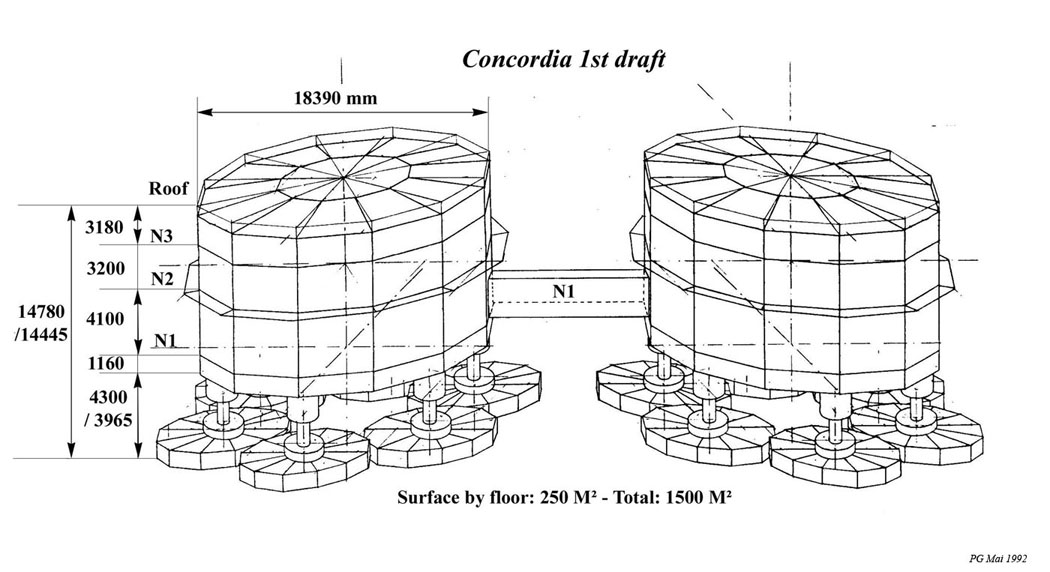
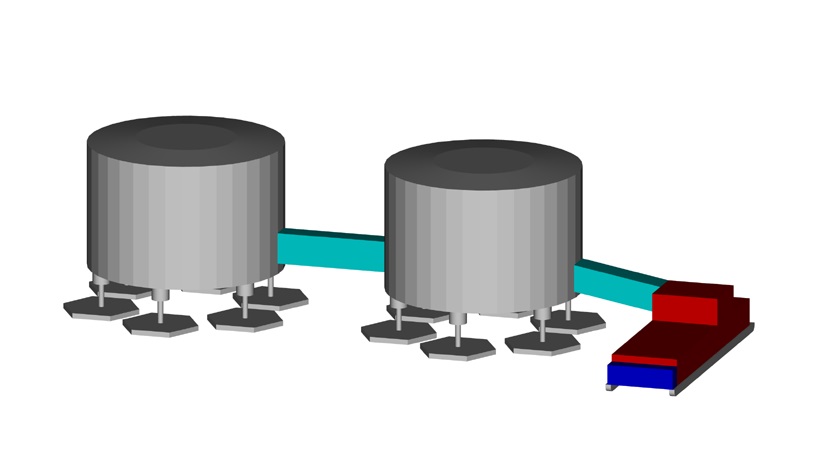
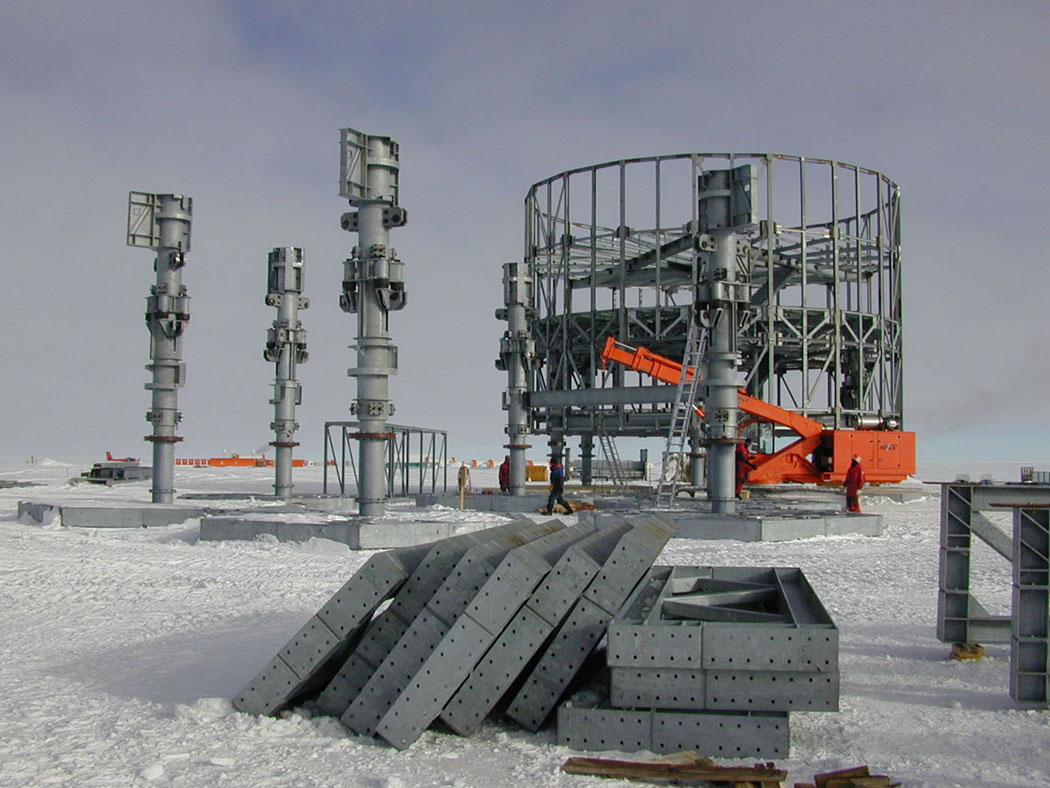
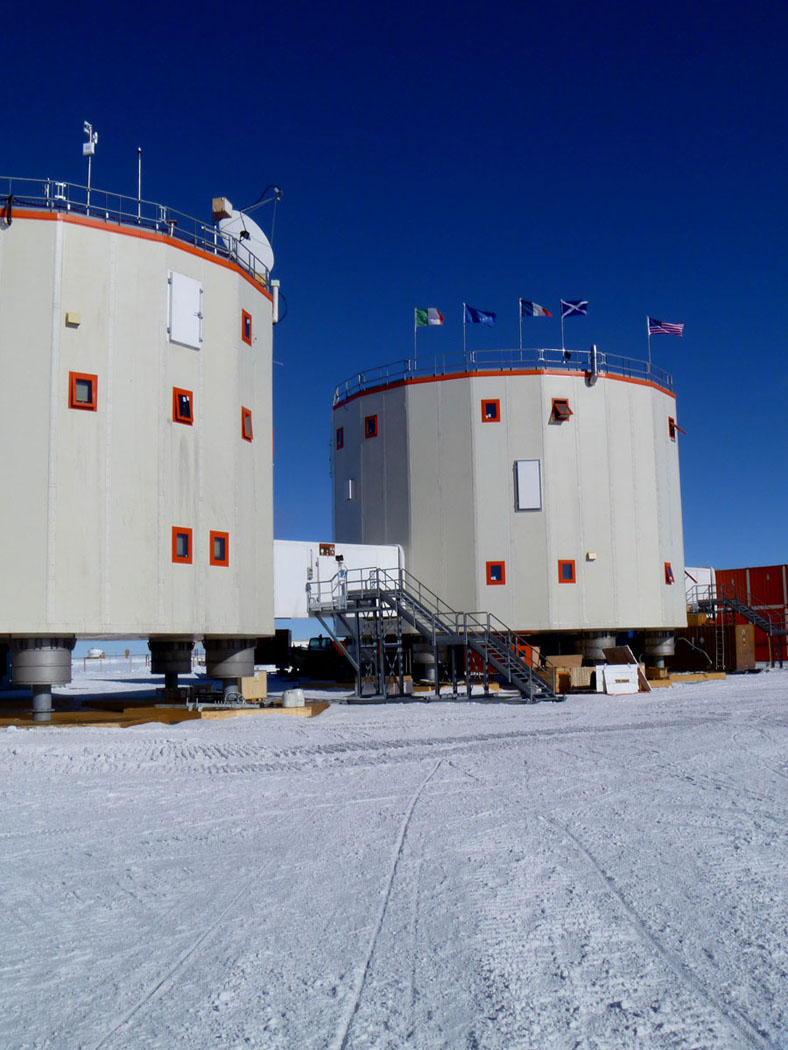
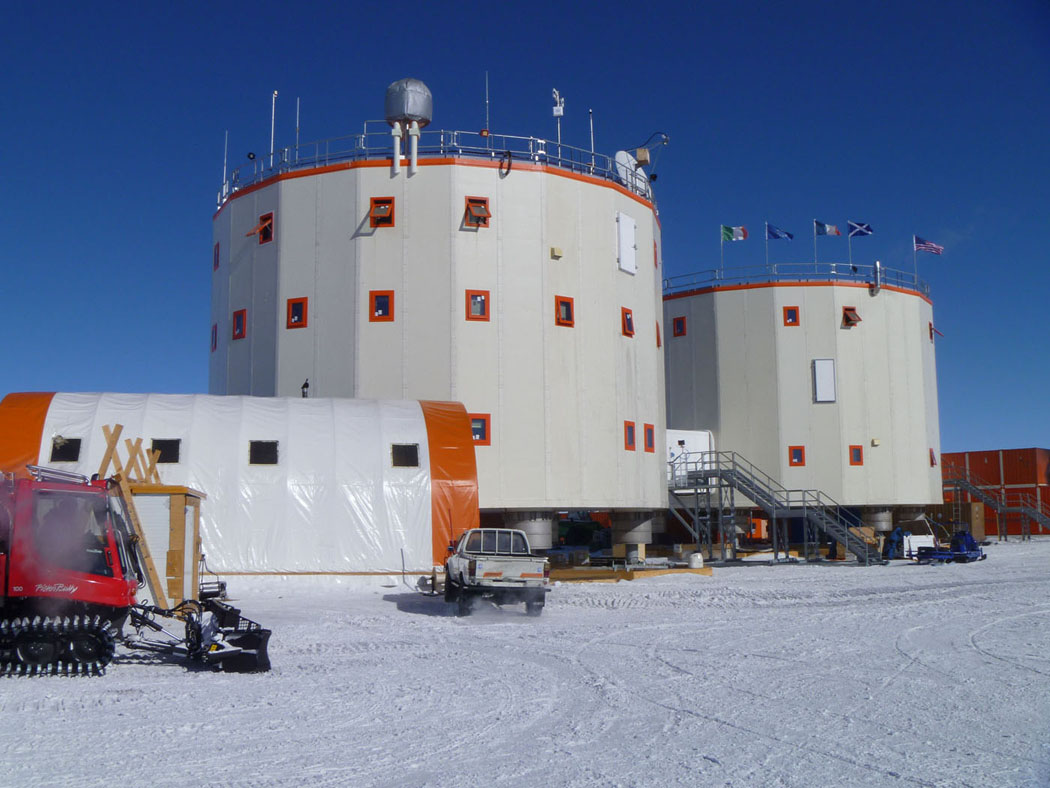
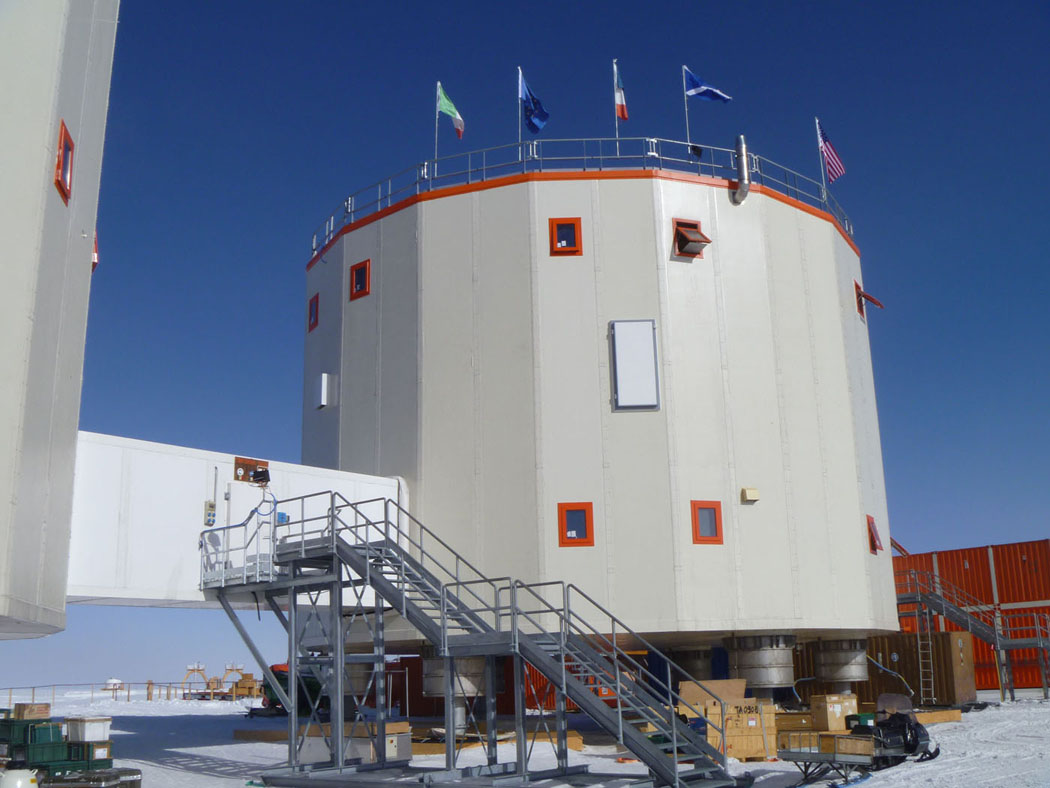
The station, jointly managed by IPEV and ENEA-UTA, originally comprised three main buildings with a covered and heated floor area of 1,800 m², complemented by the summer camp — the former construction camp, which also serves as a fallback facility. Over time, additional scientific and logistical installations were added outside, doubling the total built area. All superstructures sit on the surface of the névé. Two of the three winter buildings, housing the main living and working quarters, are single-unit structures resting on a system of self-elevating piles; the third houses the main power plant and technical services. The summer/emergency camp and peripheral installations are made up of modular elements, most of them mounted on moveable frames so they can be shifted clear of snowdrifts.
The technical installations rely on standard systems that are straightforward to manage for the maintenance teams that rotate through annually. Electrical power is supplied by a plant comprising three diesel generators — two rated at 250 kVA and one at 140 kVA — with only one running at any given time. Waste heat from the engine circuits is recovered for space heating. Annual fuel consumption, covering electrical demand (110 kW on average) and heating requirements (75 kW on average), ranges between 280 and 300 m³.
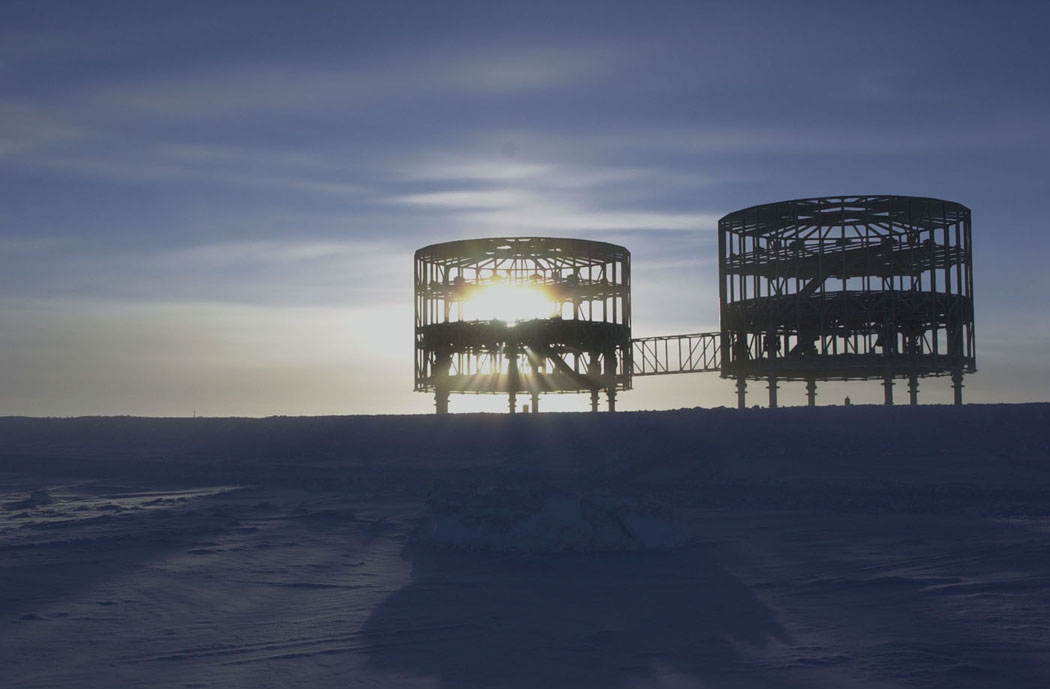
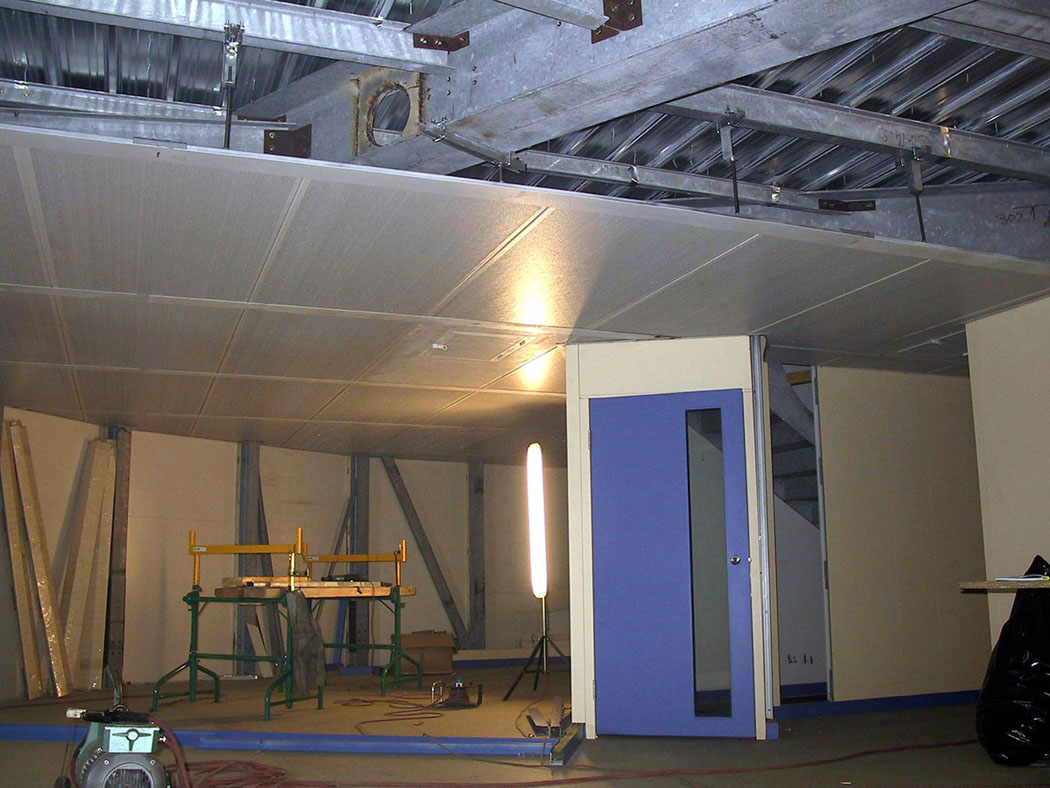
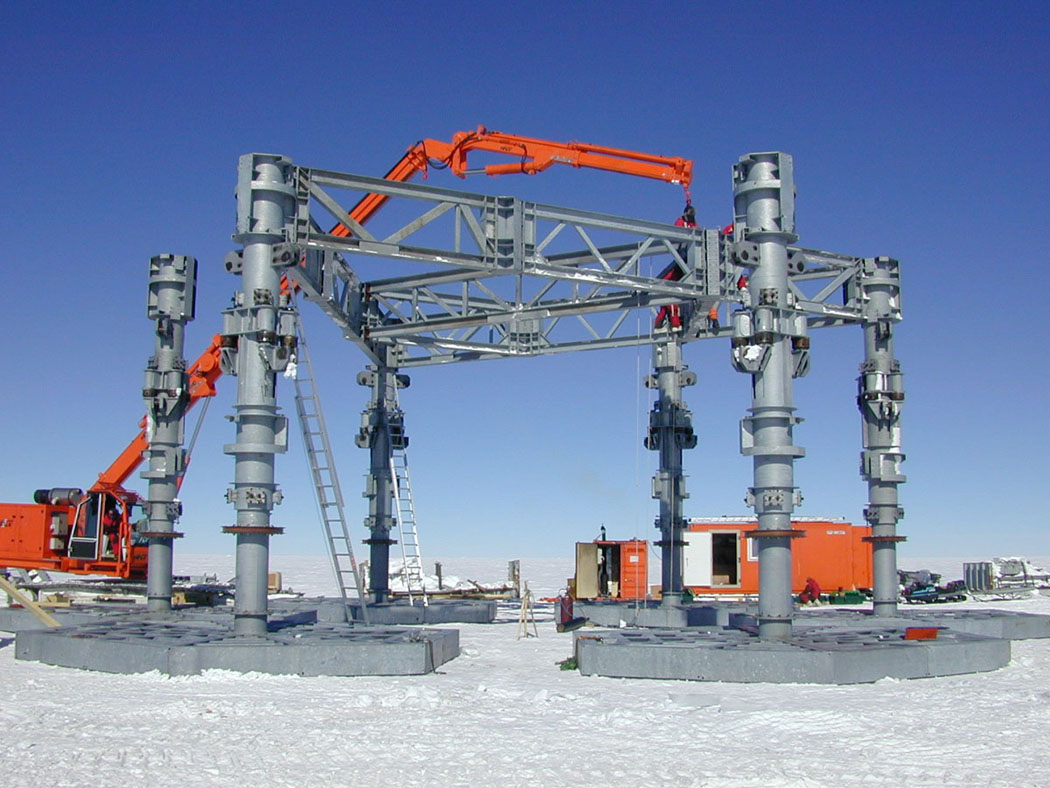
The two self-elevating buildings are 18-sided polygons, each supported by six adjustable piles resting on a footing pad that distributes the load across the snow at an acceptable bearing pressure. Each pile can be operated using hydraulic jacks. The system not only allows the structure’s foundation level to be adjusted, but also — through successive sequences of jacking — enables the entire building to be raised in step with the rising surface level caused by snow accumulation.
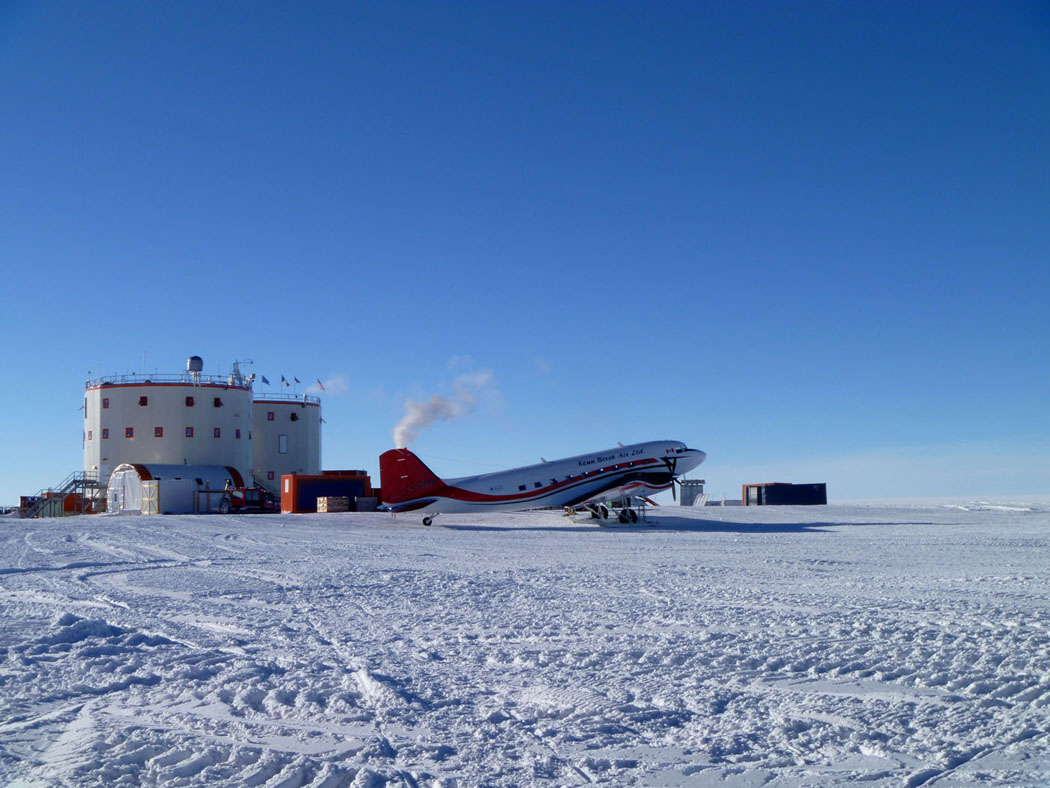
From the outset, the project incorporated measures to minimise its environmental footprint, in line with — and in many respects beyond — the requirements of the Antarctic Treaty, with particular attention to protecting the quality of scientific observations. Exhaust gases are condensed to limit water vapour emissions; lubricants and waste are repatriated. All tanks — whether for fuel, potable water, recycled water or sludge — are double-skinned.
Grey and black wastewater are collected through two separate vacuum-operated networks. Grey water is treated and recycled for washing purposes via a four-stage process — ultrafiltration, nanofiltration and two stages of reverse osmosis — developed in collaboration with ESA, which saw potential applications for its own programmes. A treatment system for black water using anaerobic fermentation and continuous filtration had been considered, but never progressed beyond the industrial prototype stage. In the early years of the station’s operation, organic waste was incinerated; it is now discharged into a shaft where it remains frozen, locked within the ice sheet.
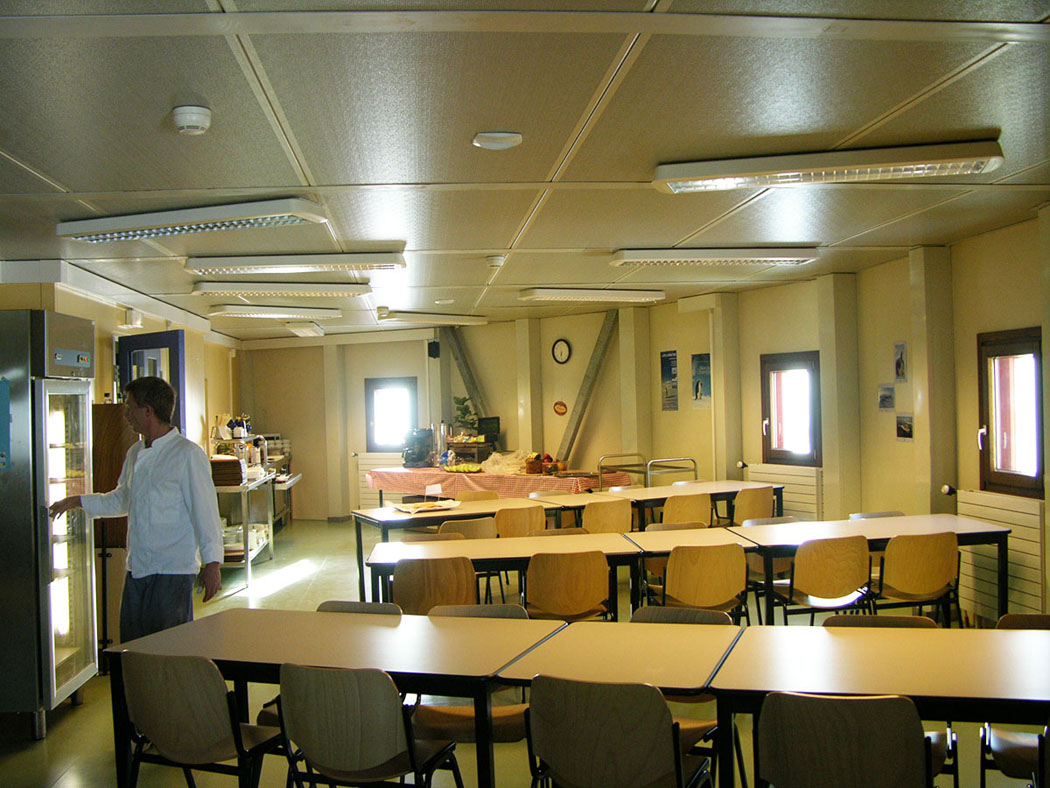
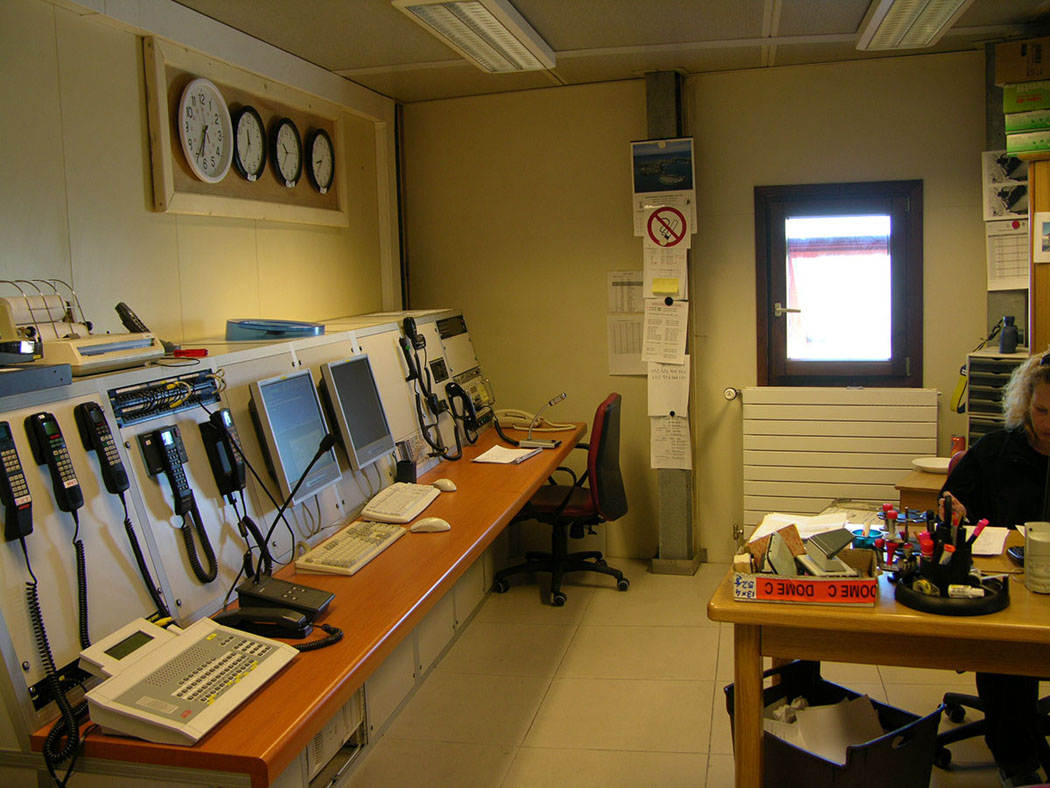
The station has now completed 21 winter-over seasons. A solar power generation array was commissioned as early as 2021, and its expansion towards full site autonomy for four months of the year is currently under consideration. Convoy operations have continued steadily since the construction phase: the 82nd convoy was completed last February, bringing total deliveries to the site to more than 12,000 tonnes.