
For the AWACA project, under contract with CNRS and EPFL, I carried out the preliminary design work covering the technical conception of the shelters, their planned installation on site, thermal studies, and the selection and integration of the power generation systems. I was supported by the technical department of the French Polar Institute (IPEV), which took over upon delivery of the equipment to manage on-site installation, and is now completing the consolidation of the whole setup, ensuring consistency across installations, maintaining the stations and addressing any issues identified.
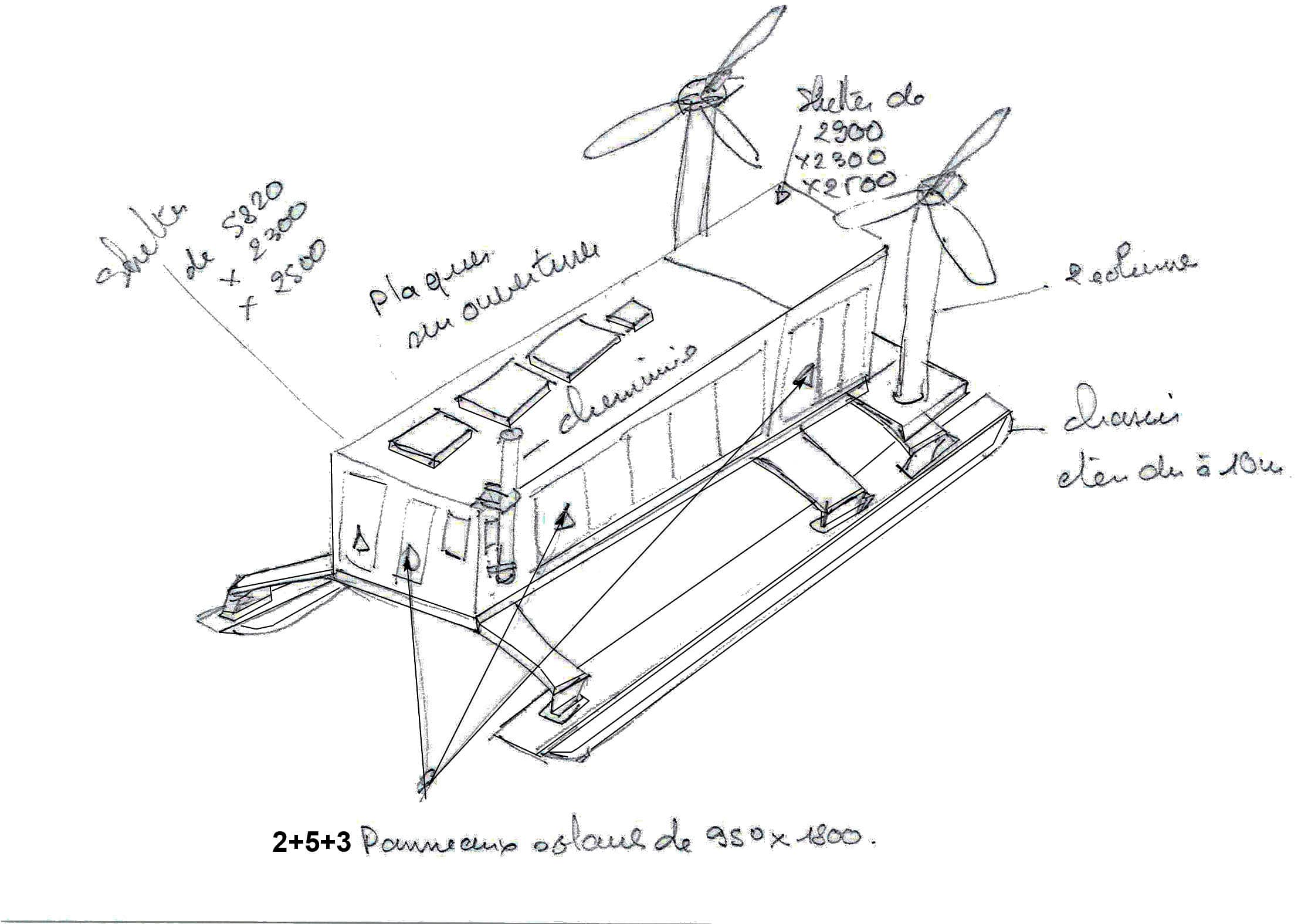
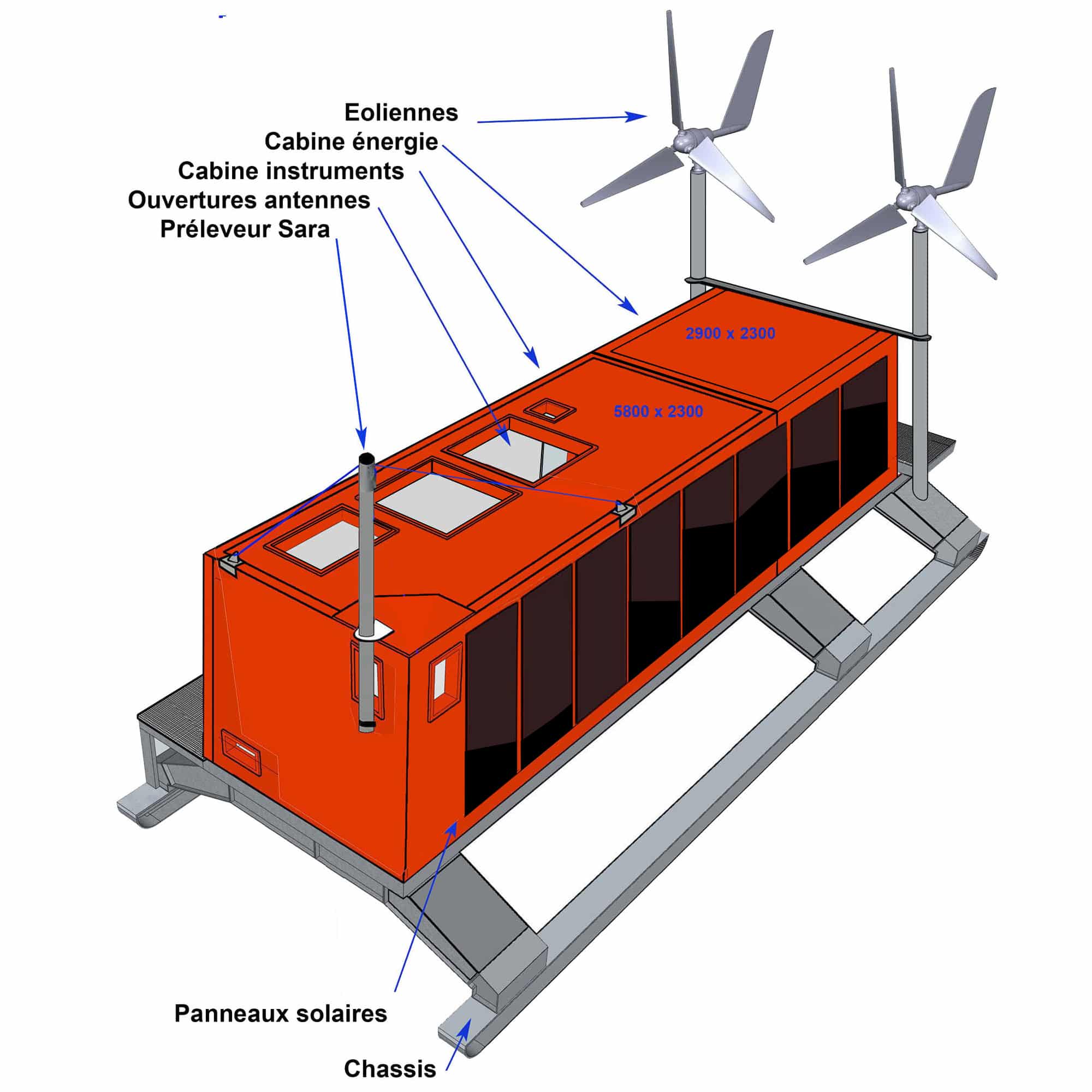
of the three remote Awaca stations
1. The scientific project
AWACA is a European research project aimed at observing and better understanding the water cycle between the atmosphere and the Antarctic continent. The Antarctic ice sheet is the largest freshwater reservoir on Earth. Each year, the amount of snow accumulated on the continent is equivalent to twice the current rate of sea level rise, whilst an ice flux of similar magnitude flows into the ocean. Antarctica’s contribution to sea level rise results from the small imbalance between these two major fluxes. The data collected are intended to feed meteorological and climate models enabling reconstruction and forecasting of the ice sheet’s water balance over multi-century timescales.
Four partner laboratories are involved, each responsible for a specific instrumental theme: EPFL (Lausanne), LMD (CNRS/Sorbonne/École Polytechnique), and LSCE.
2. Installation sites
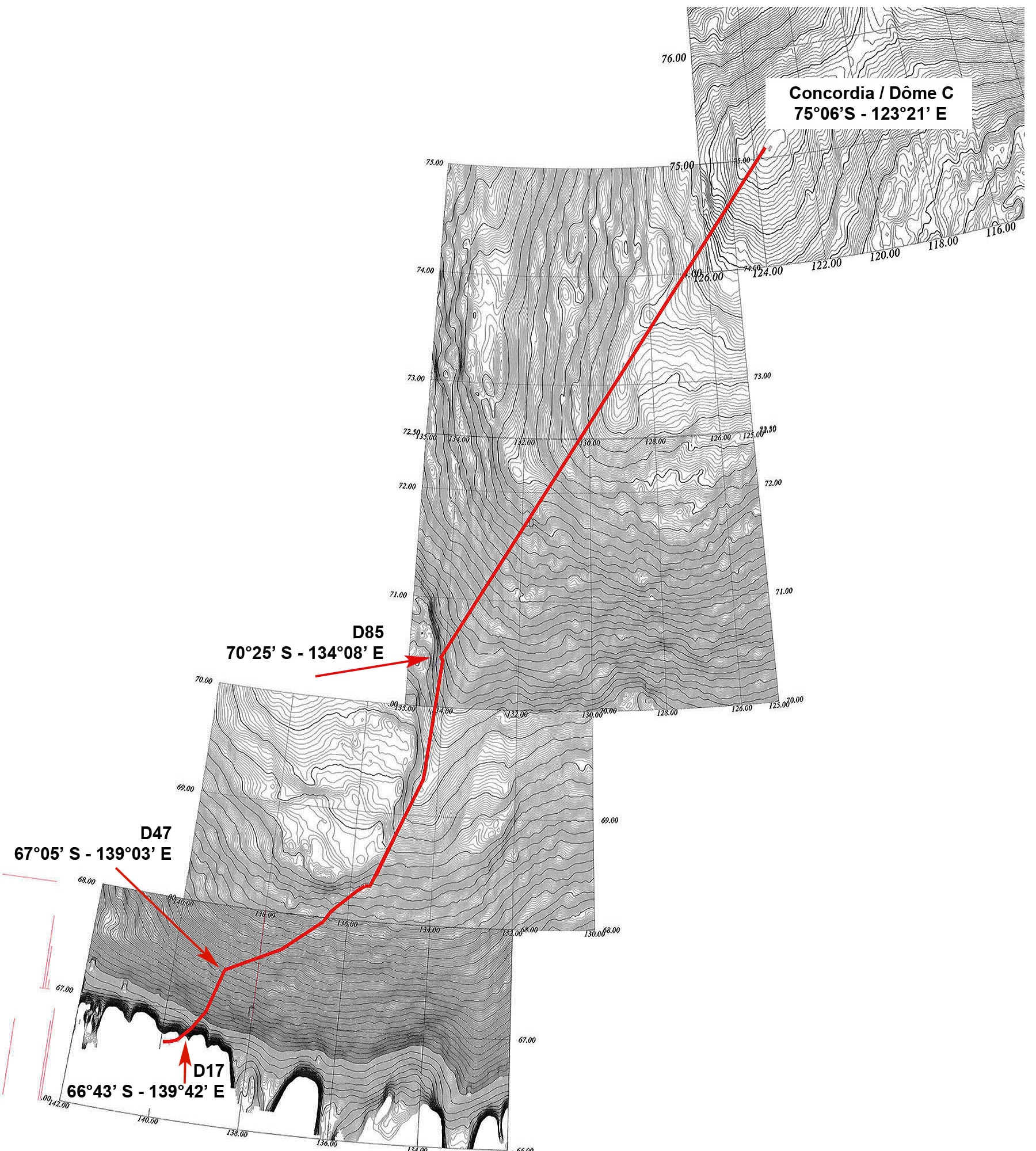
Five monitoring stations — referred to as OPUs — are installed: two within existing stations at Dumont d’Urville and Concordia, and three deployed along the traverse route linking Dumont d’Urville to Concordia:
| Site | Coordinates | Altitude | Distance from coast | Min T° | Max T° | Wind |
|---|---|---|---|---|---|---|
| Dumont d’Urville | 66°40’S / 140°E | sea level | coast | −35°C | +5°C | 65 m/s max |
| Beacon D17 | 66°43’S / 139°42’E | 500 m | 12 km | −40°C | +5°C | 60 m/s max |
| Beacon D47 | 67°05’S / 139°03’E | 1,570 m | 95 km | −50°C | −5°C | 60 m/s max |
| Beacon D85 | 70°25’S / 134°08’E | 2,660 m | 475 km | −64°C | −10°C | 20 m/s max |
| Concordia | 75°05’S / 123°21’E | 3,233 m | 1,109 km | −80°C | −16°C | Average 5 m/s |
At Dumont d’Urville, the instruments are installed in existing facilities. At each of the four continental sites, a dedicated instrument shelter is provided. At Concordia it is connected to the local power grid, whilst sites D17, D47 and D85 operate in full autonomy using an adjacent power shelter, with a single maintenance visit per year during the austral summer.
3. Shelters: design and construction
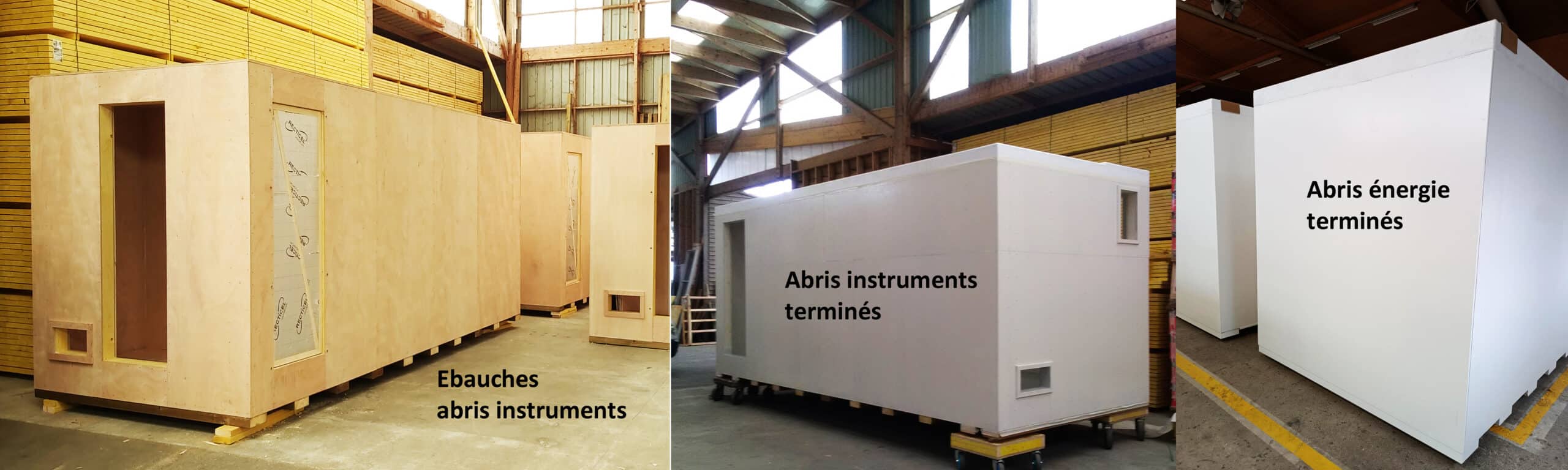
The shelters are self-supporting cabins with a timber frame, clad in plywood sandwiching panels of insulating foam. Roofs and floors are protected by a fibreglass/resin composite waterproofing layer. The exterior colour is white to minimise thermal fluctuations; the interior is cream white RAL 9001. All materials and adhesives are rated for low temperatures. Wall thickness varies according to site conditions: D17: 80 mm, D47: 120 mm, D85 and Concordia: 140 mm.
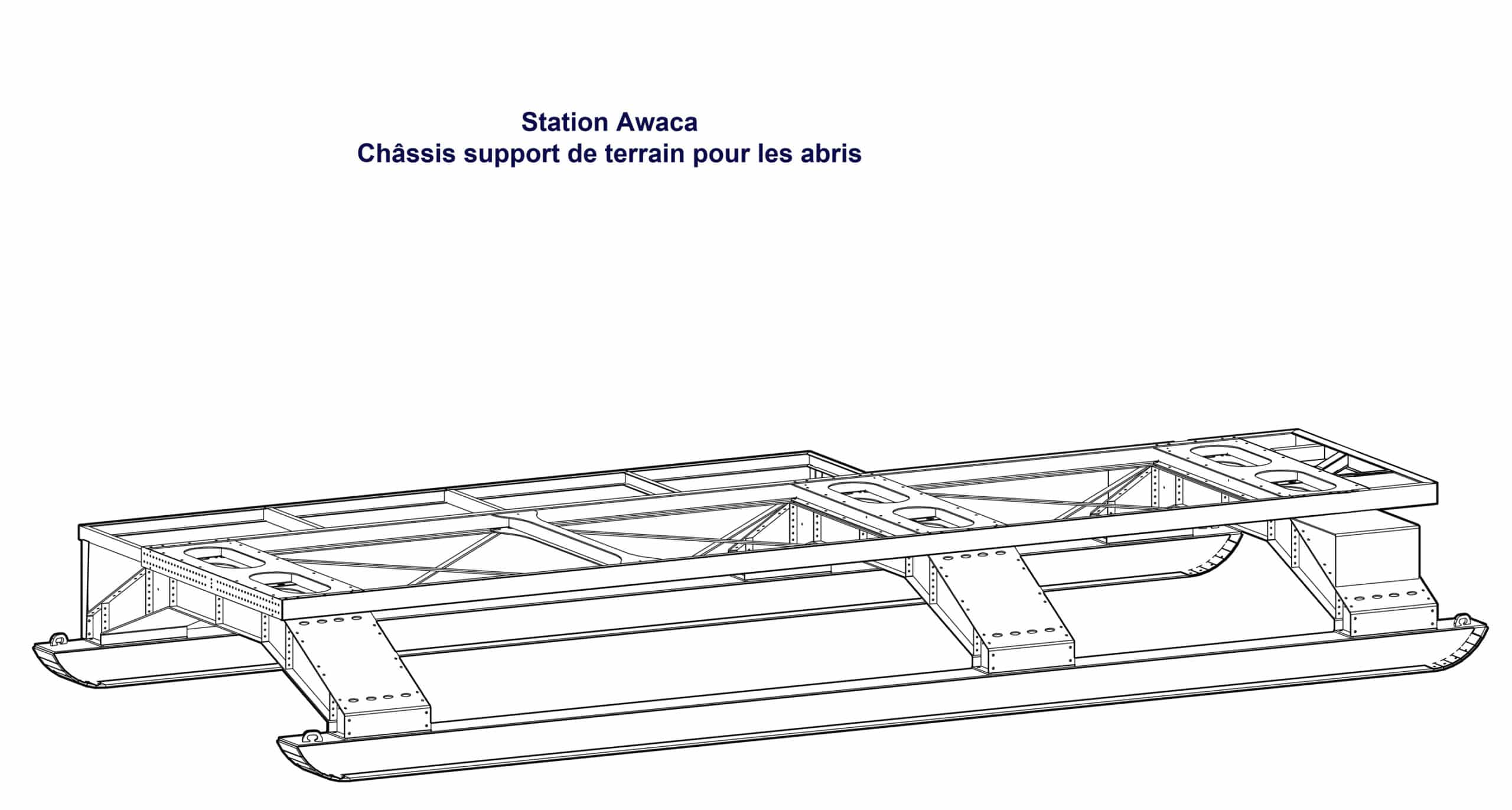
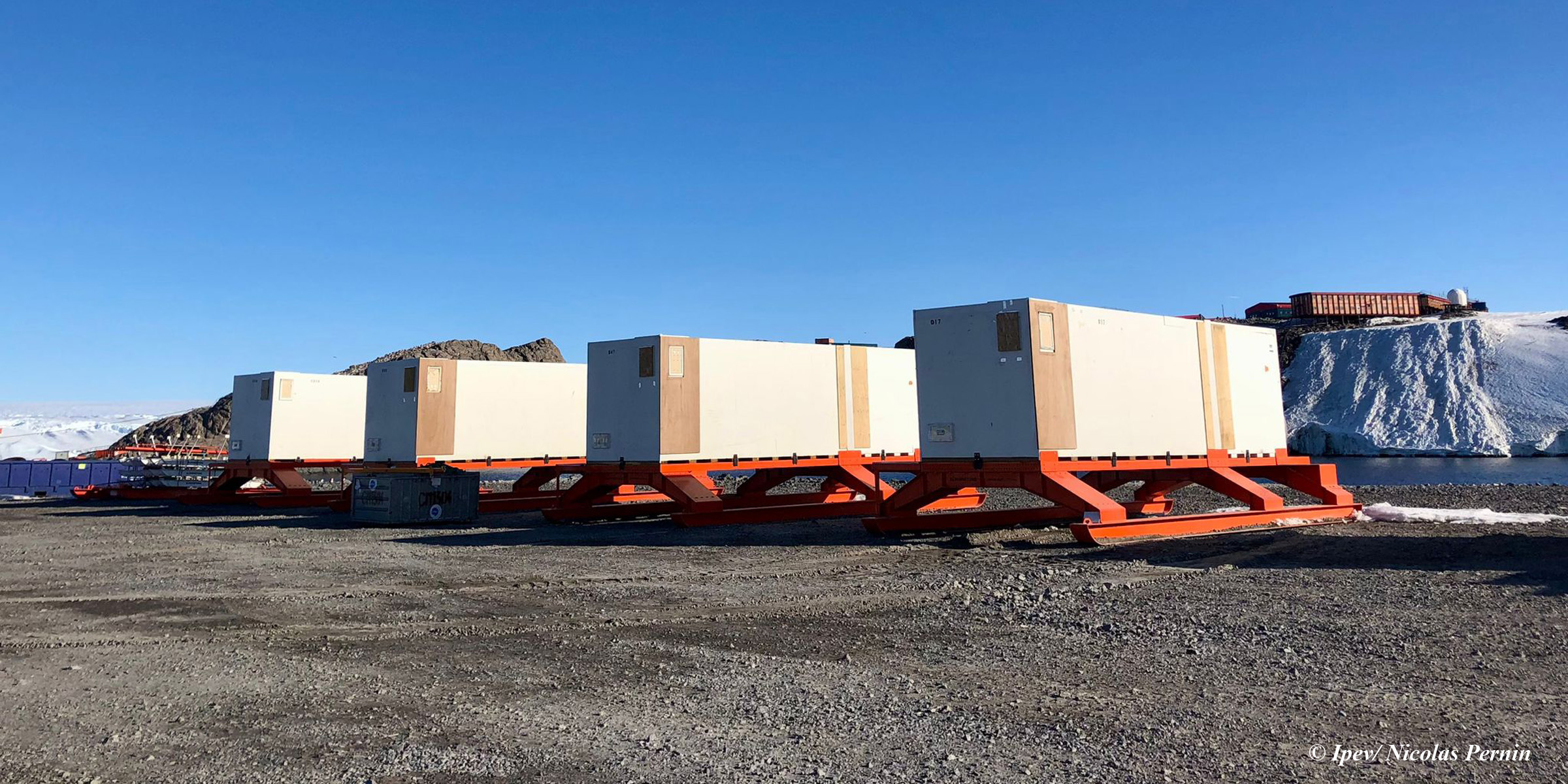
To prevent burial by drifting snow, each shelter is mounted on a raised sled-chassis approximately 1 m above ground, itself positioned on a snow mound. An entrance airlock and an interior partition separate the instrument room from the power room. The interior setpoint temperature is +10°C. It is maintained through equipment heat dissipation and regulated at the lower end by an electric convector heater and at the upper end by a ventilation/cooling system during summer.
4. Power supply
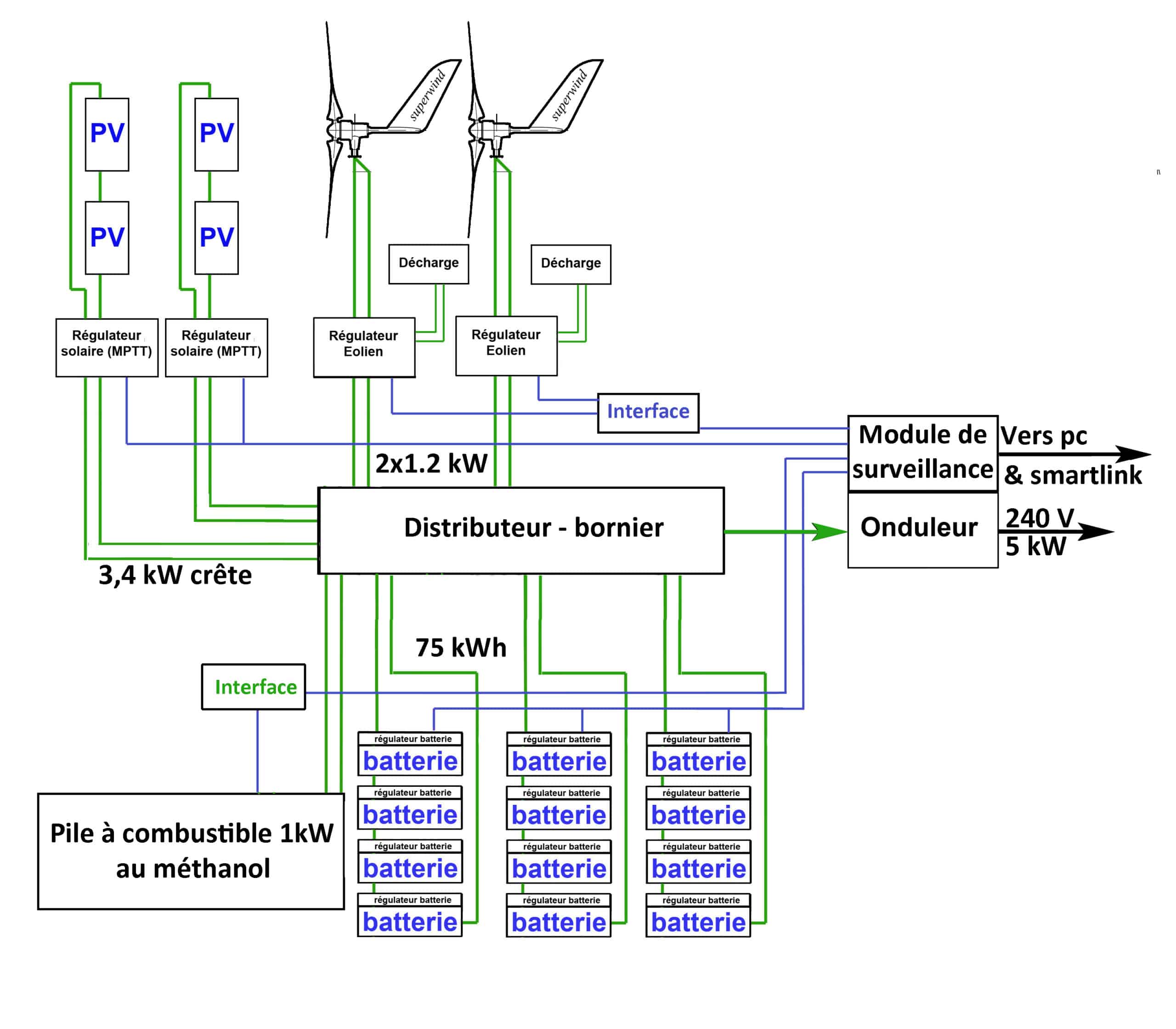
Each station’s power consumption is estimated at 1,000 W continuous (24 kWh/day). Three generation sources combined with a battery bank are installed at the remote sites:
• Two Superwind SW1250 wind turbines (2 × 1,250 W, 2.4 m rotors). Cut-in speed 3.5 m/s, rated power reached at 11.5 m/s.
• Eight Creawatt Lux 430F solar panels (total peak output: 3,440 W), mounted on the north-facing facade.
• One Siqens fuel cell (1,000 W nominal at 99%), automatically activated by battery charge level.
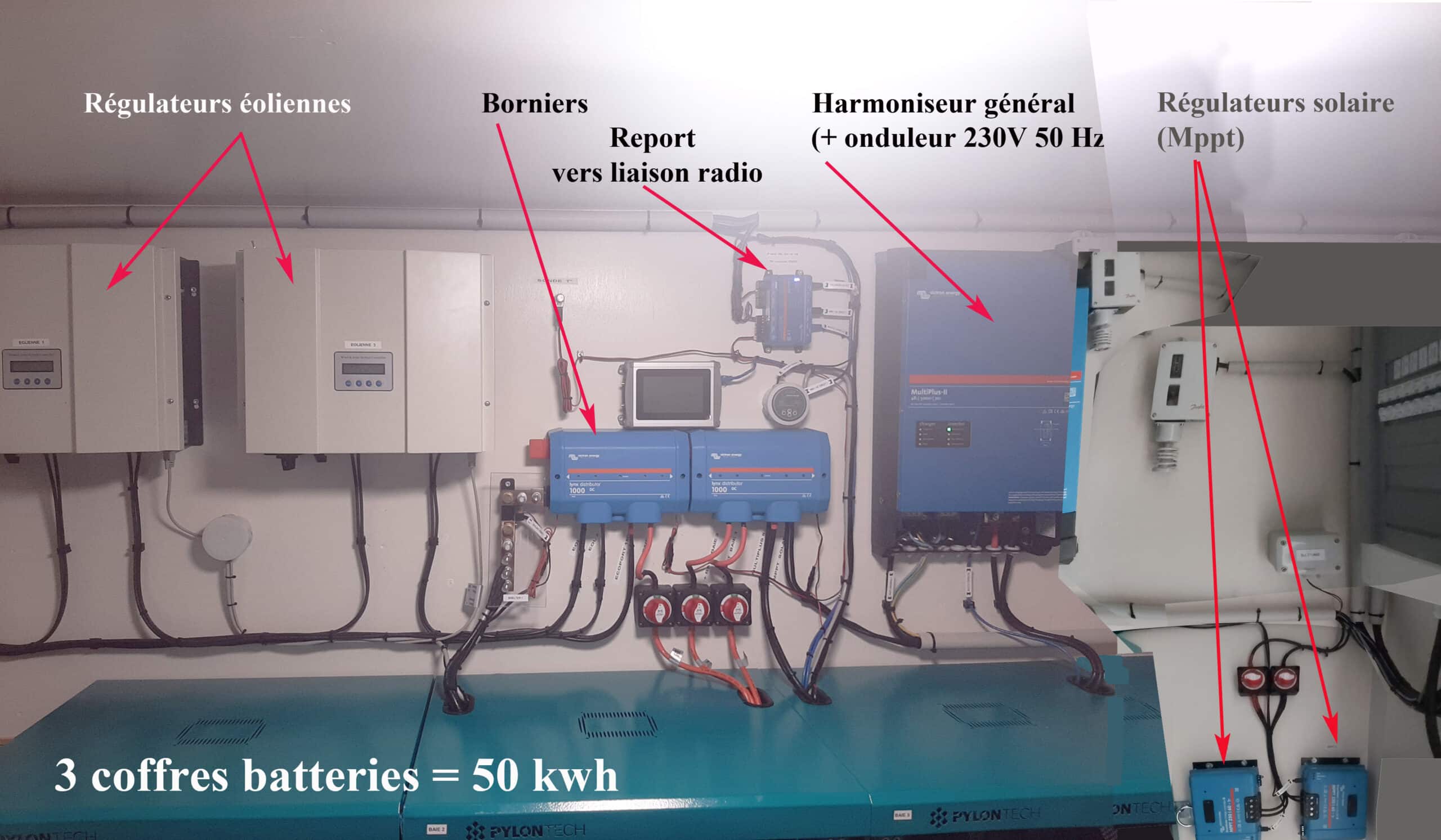
• Storage provided by 11 Pylontech batteries (48 kWh).
The entire generation/storage system operates at 48 V DC and is managed by a Victron inverter. Communications are handled by a Victron Cerbo controller enabling remote monitoring via Starlink. Methanol tanks are mounted at the end of the sled-chassis.
5. Accessories
Each shelter is fitted with an air sampling chimney extending 1.5 m above the roof for the CEA-LSCE isotopic analyser, and a 7 m mast installed nearby carries conventional meteorological instruments (anemometer, wind vane, etc.) is installed near each station. Rather than being anchored directly into the névé, it is guyed onto a 3 × 3 m steel raft weighing 850 kg — a more robust solution and easier to clear of snow. Additional short masts allow the fitting of supplementary sensors.
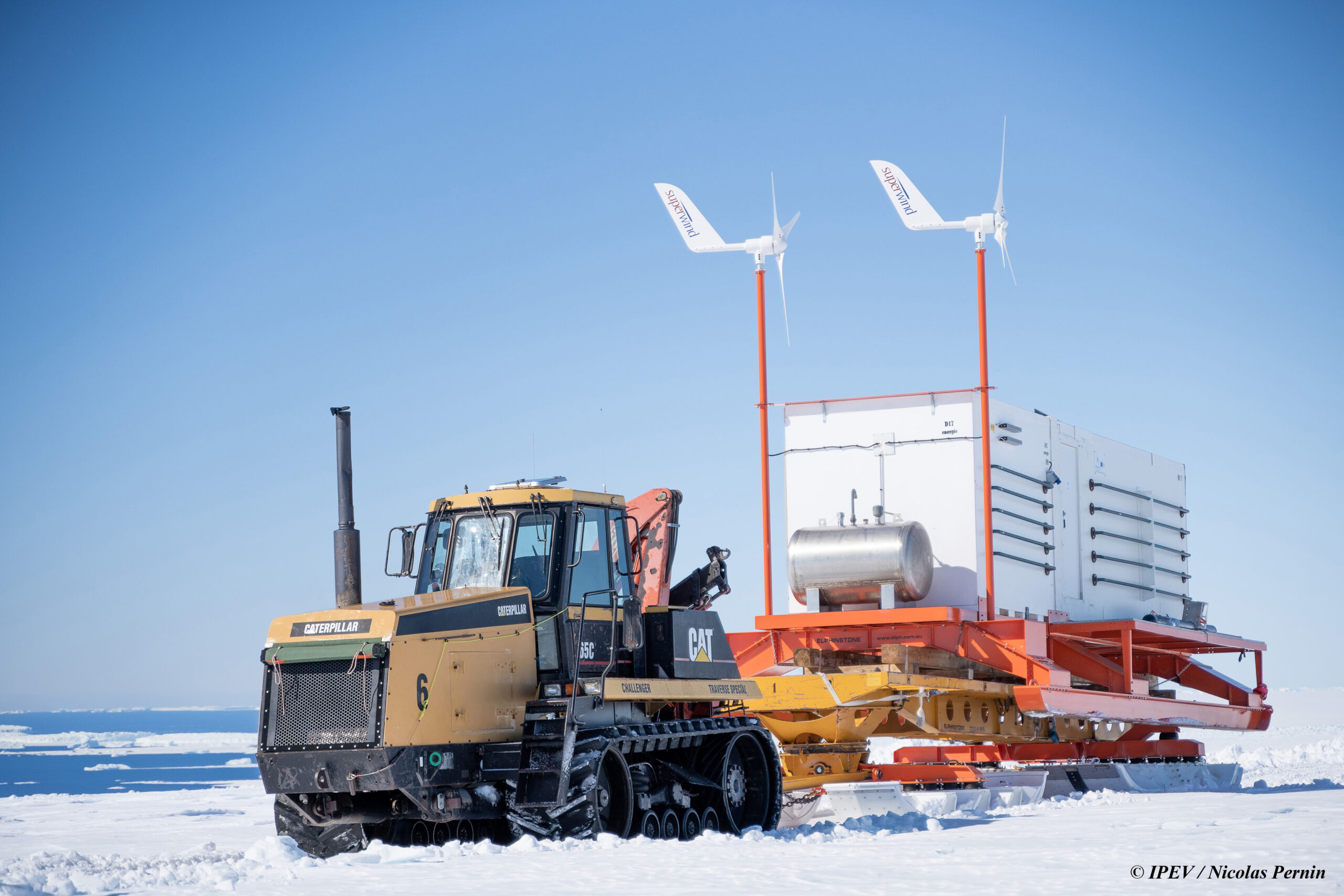
Delivery of the units by the Concordia traverse system
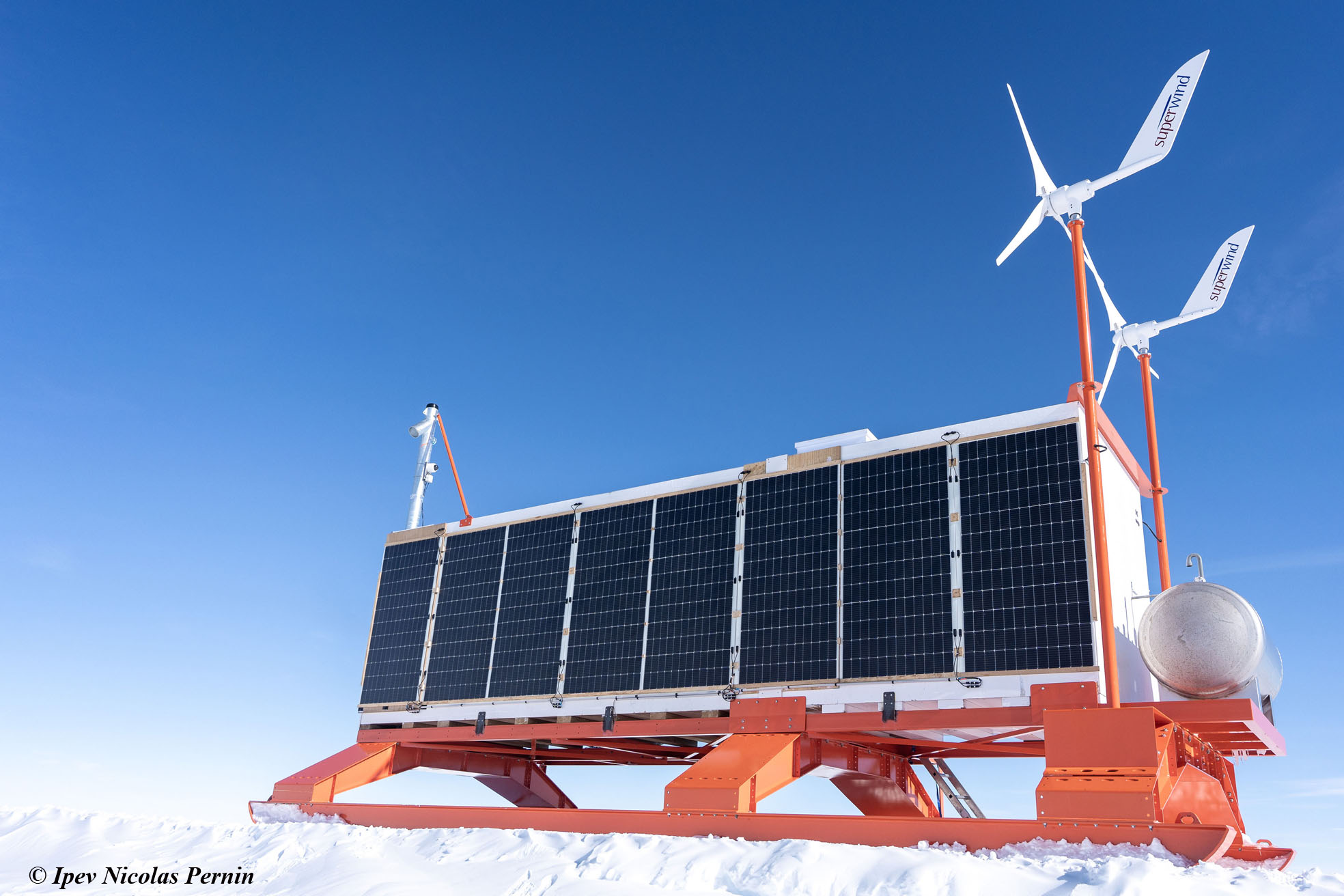
6m instrumentation units and 3m power units on site