
1. A bit of history:
The difficulties posed by the sea ice between 2011 and 2018 – with a new development in the 2013-14 summer, when for the first time since the start of expeditions in Adélie Land, the sea ice had not broken up completely by the onset of summer – had forced us to revise the entire standard operational process. Even though the complete break-up did not occur, the ice edge nonetheless remained close, at 25 km from the station.
Following a helicopter sling-load operation, the fuel delivered by sling load was nevertheless insufficient to rebuild the necessary safety stock, with a further blockage anticipated the following season. It was then decided to prepare to land on the sea ice at the start of the 14/15 season to transfer as much fuel as possible. This first operation, involving heading out to meet the ship on the sea ice (75 km from the station), was carried out successfully in November 2014.
The following season, in 2015-16, the sea ice cleared normally over summer and it was reasonable to hope for a return to ice-free summer seasons. Well, that was not at all the case, as 2016-17 turned out to be the season with the smallest break-up since access to the Dumont d’Urville station region has been routine. Indeed, in 2016-17, the ship was never able to approach closer than 60 km, and even then only on the eastern side of the station. The western side never broke up completely and remained unsuitable for any navigation throughout the season. The polynya that forms every spring opened too early, in September, followed by a calm period allowing refreezing, and the area never reopened.
Faced with this situation, and bearing in mind that helicopter transport had its own limitations, it was decided very early, in early 2017, to repeat the November 2014 sea-ice landing operation, drawing on the lessons learned and making the operation safer. Indeed, should circumstances require landing to the east, more rivers (rivers = local breaks in the sea ice) would certainly need to be crossed than in November 2014, requiring equipment capable of crossing them.
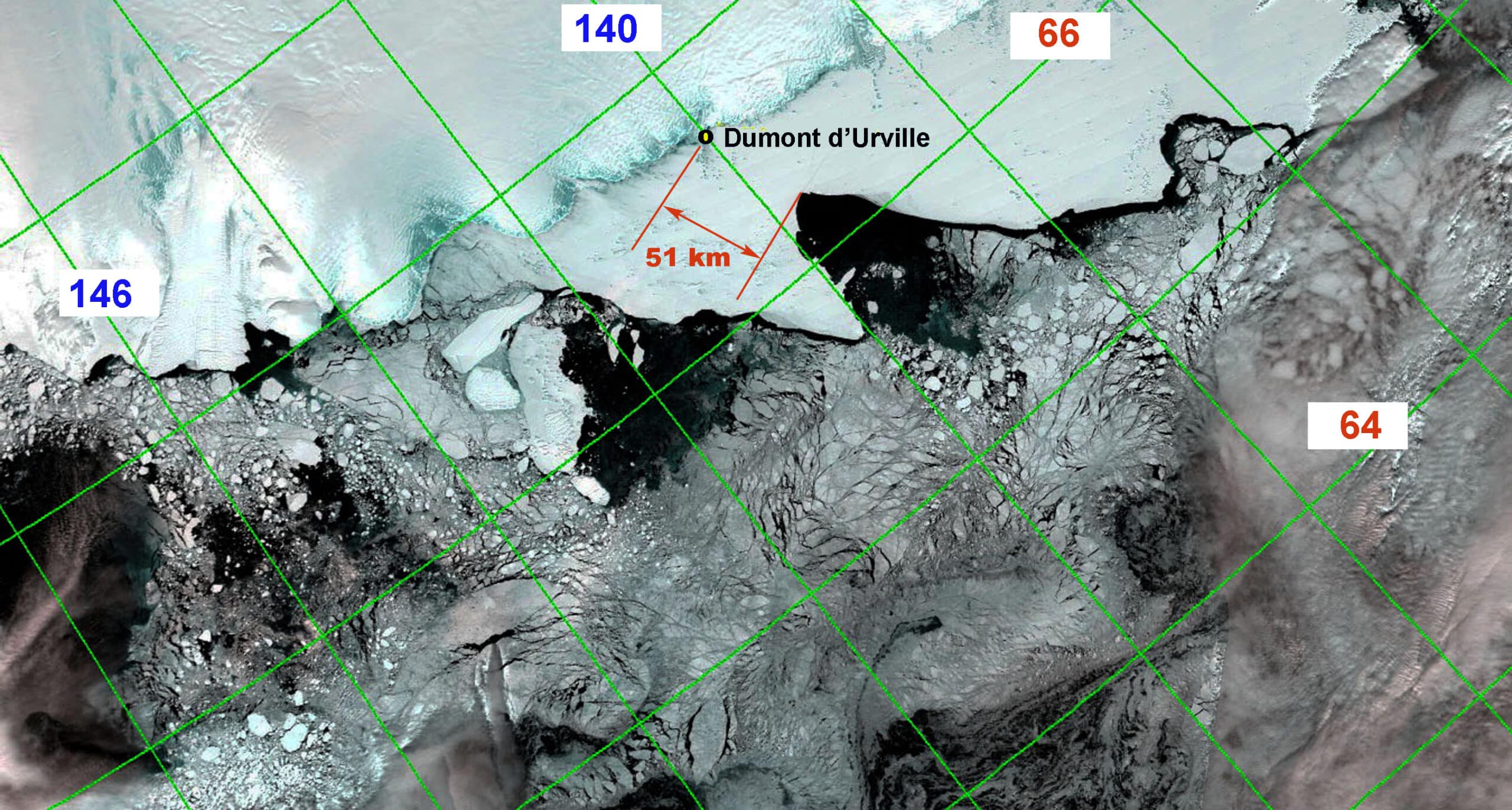
Extent of pack ice off Dumont d’Urville – 140°00’E x 66°40’S
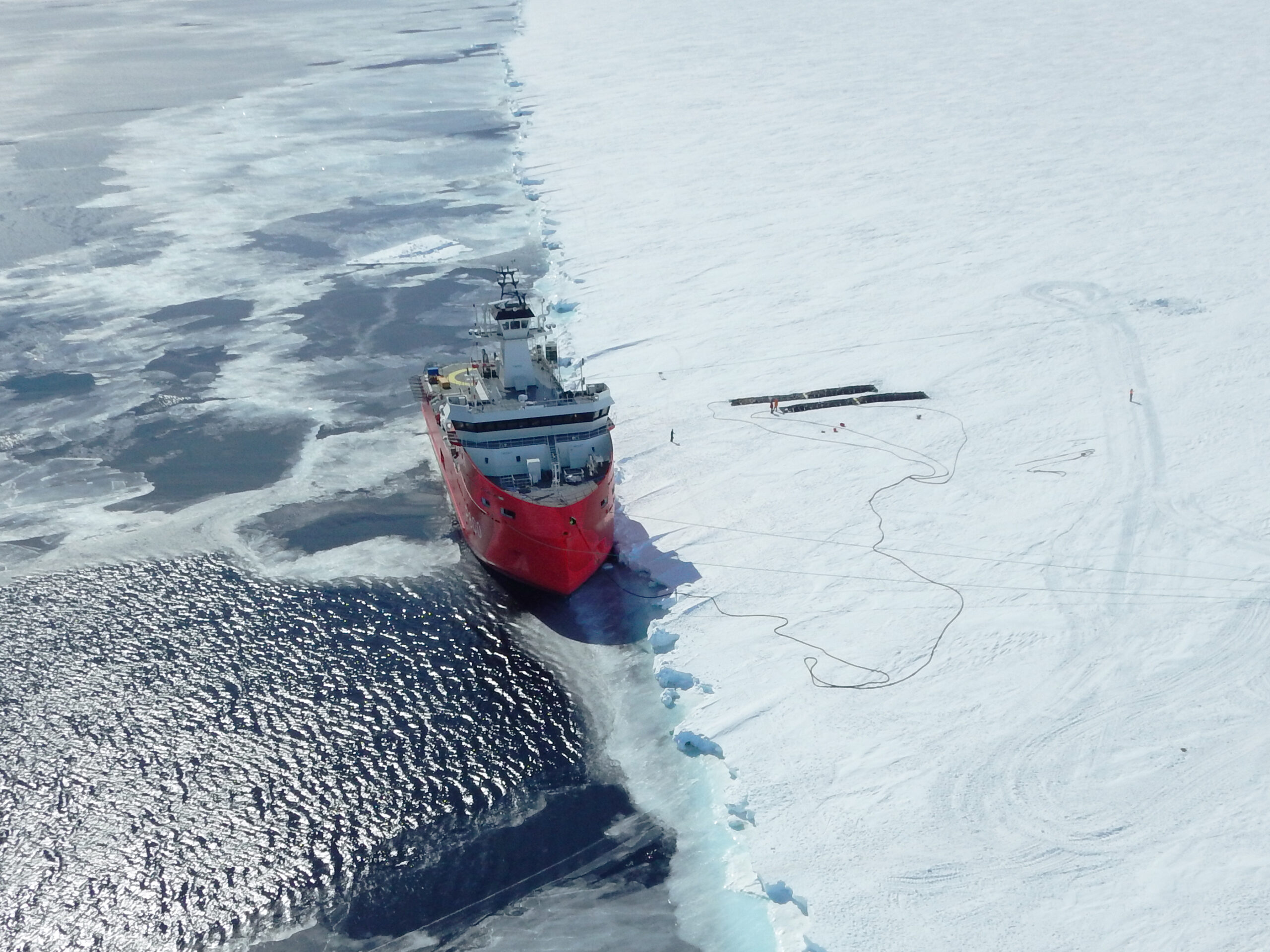
moored to the pack ice
2. The equipment:
The design of the operation, the study of the proposed principle and equipment, their procurement and subsequent field implementation formed the subject of my first major consultancy contract with IPEV.
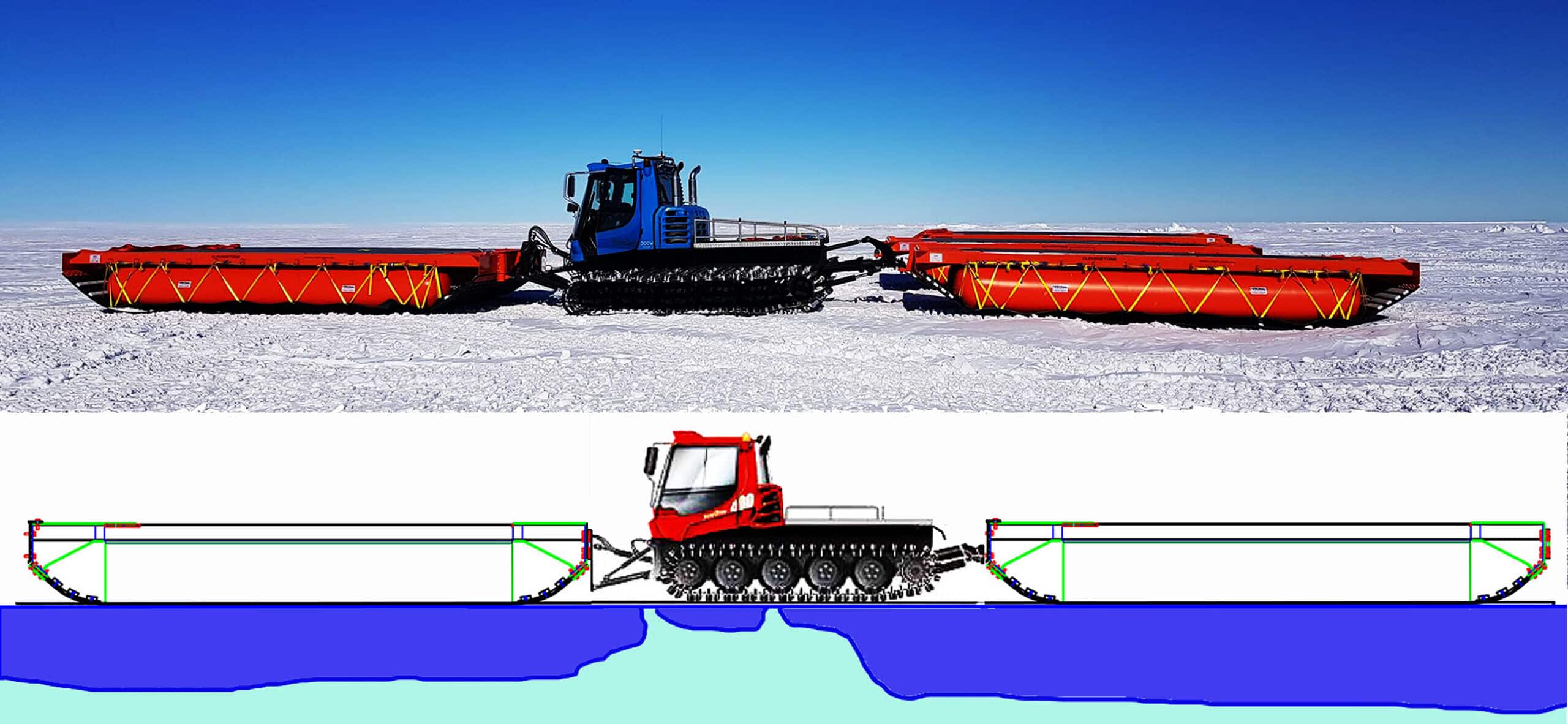
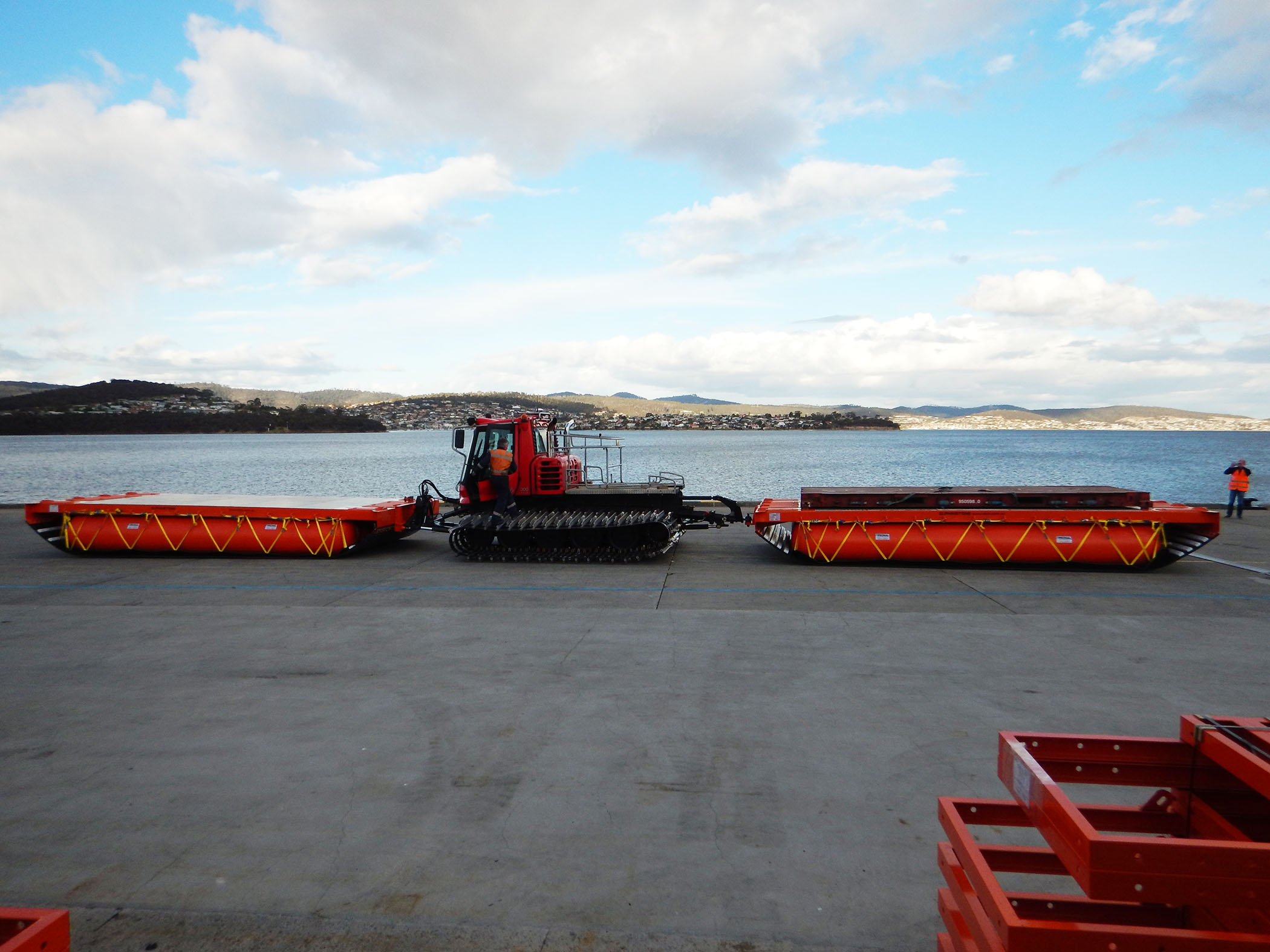
Test in combination with air-cushion sledges
Drawing on the experience gained in 2014, which had involved using the pneumatic mattress sledges from the Concordia convoys and flexible transport tanks placed on polyethylene sheeting, I proposed building a hybrid coupling consisting of a Kassbohrer PB 300 groomer paired with two pneumatic mattress sledges to support the vehicle, the whole assembly forming a 22 m unit. The front pneumatic mattress sledge is connected to the groomer via the blade support yoke. The blade support remains steerable (up, down, left/right). It can be left floating or taken over by the driver to stiffen the coupling if the situation requires it. At the rear, the vehicle is carried by the tiller arm, which was modified for the purpose. The principle is the same, with the arm floating but able to be locked by the driver if necessary.
Two vehicle/pneumatic mattress sledge sets were purchased, allowing 24 m³ to be transferred per trip per unit. To streamline the operation, 12 flexible tanks were deployed to speed up the filling and emptying process.
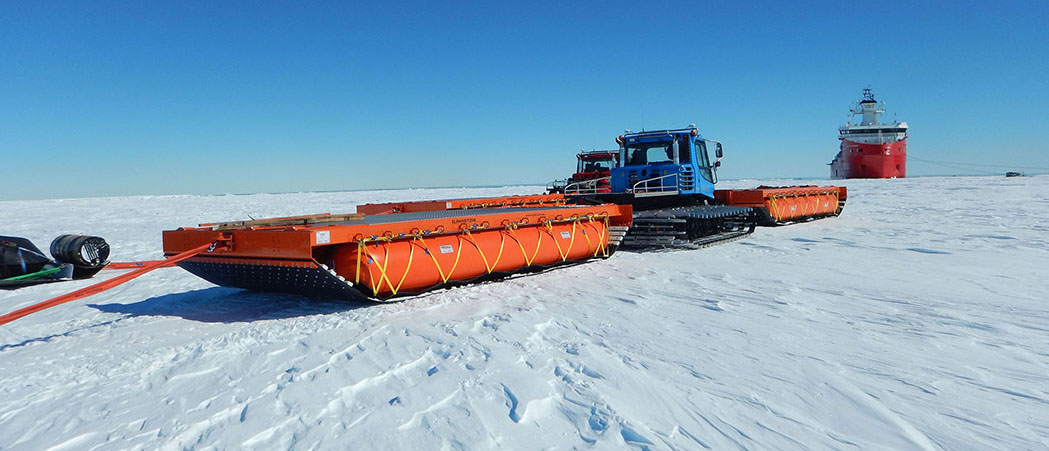
Meeting the vessel at the sea ice edge
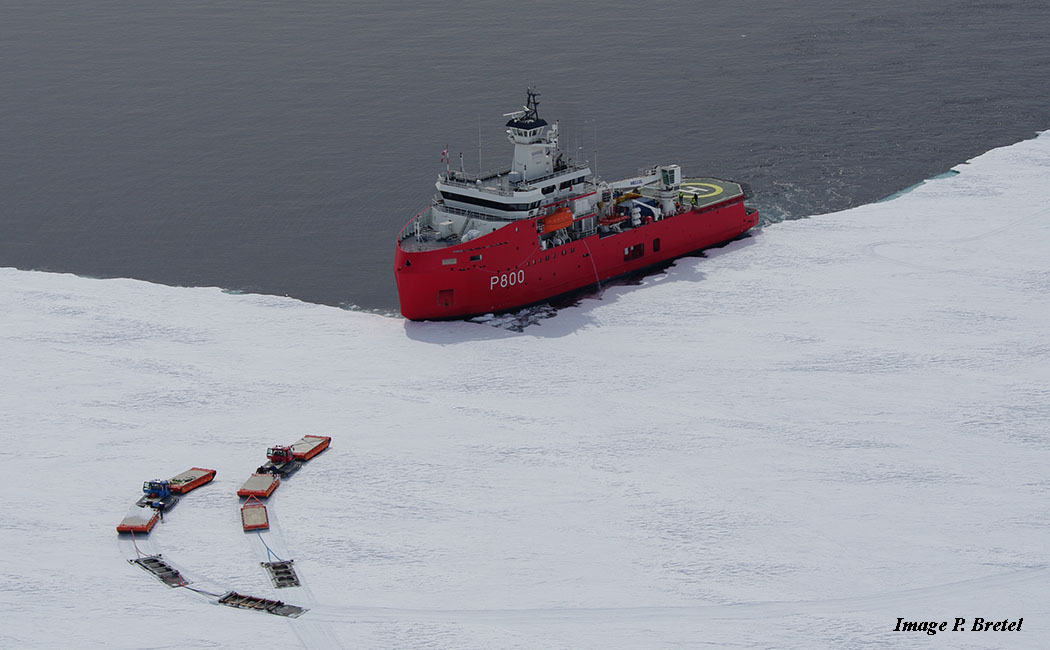
from the seaice edge
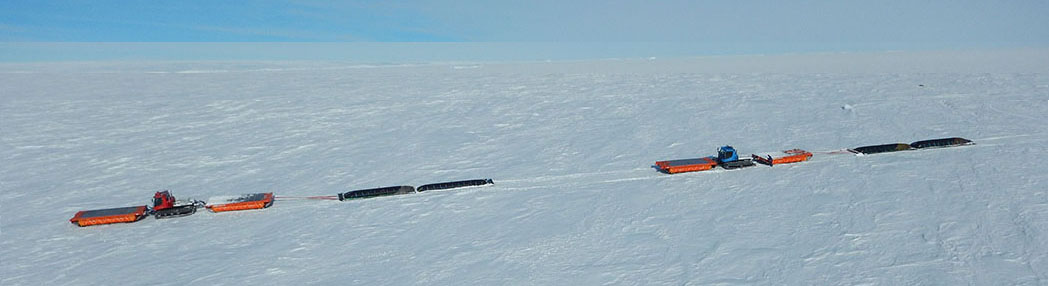
Transfers on seaice – teams in convoys
3. The operation
In the end, the summer break-up of October/November 2017 began in the west rather than, as had been feared, in the east. The polynya formed well in October, avoiding any risk of refreezing. The ice edge in early November was 49 km from the station. River reconnaissance by helicopter and thickness checks with a core sampler were carried out first. Following the November 2014 example, and to clear the ship more quickly, an intermediate depot was set up halfway between the station and the ship, maintaining a safety distance of around 30 km from the ice edge, and 410 m³ of fuel and 5 containers were transferred over 10 days of work, including depot clearance and setup/breakdown.
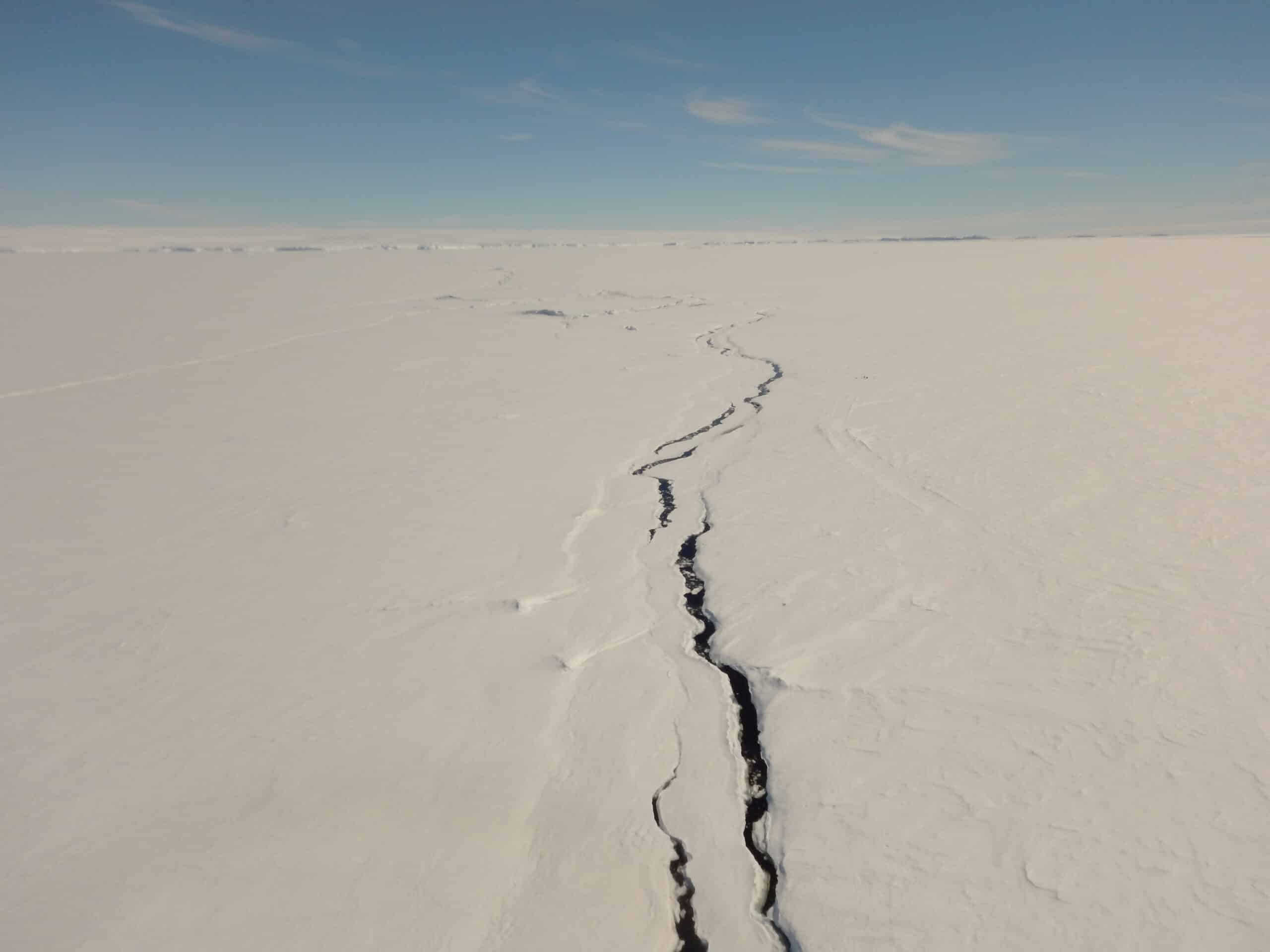
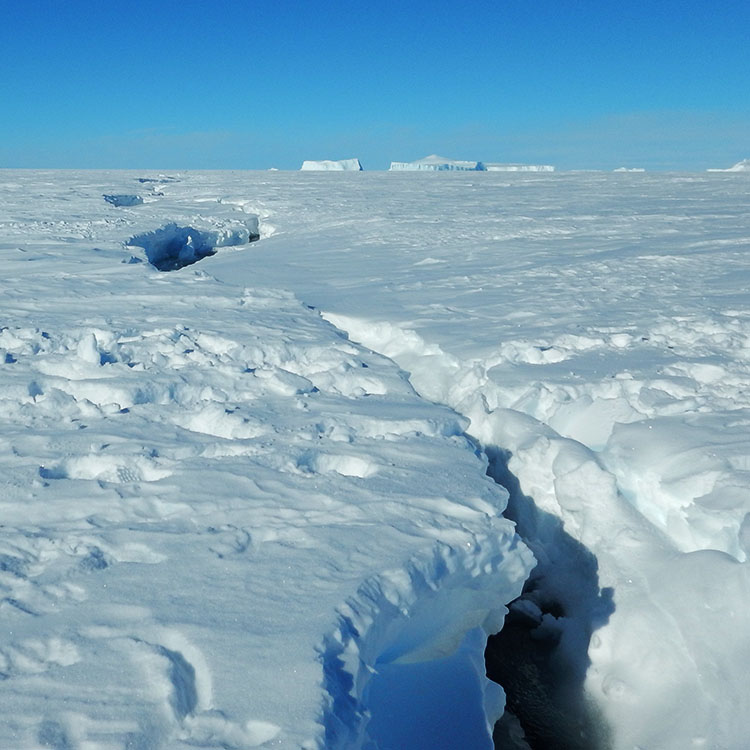
The break-up progressed very slowly, and the transfer system was used again during the next ship rotation, at the end of December. Operations had begun at 43 km, but a spell of bad weather arriving at just the right time brought the ice edge in to 13 km from the station. Operations were carried out over 5 days, with a further 400 m³ of fuel landed, along with 6 shipping containers and bulk items not suitable for helicopter transport.
The articulated groomer/pneumatic mattress sledge system proved effective for crossing rivers, but also for travelling over summer sea ice, which is typically waterlogged with meltwater from the surface snow layers.
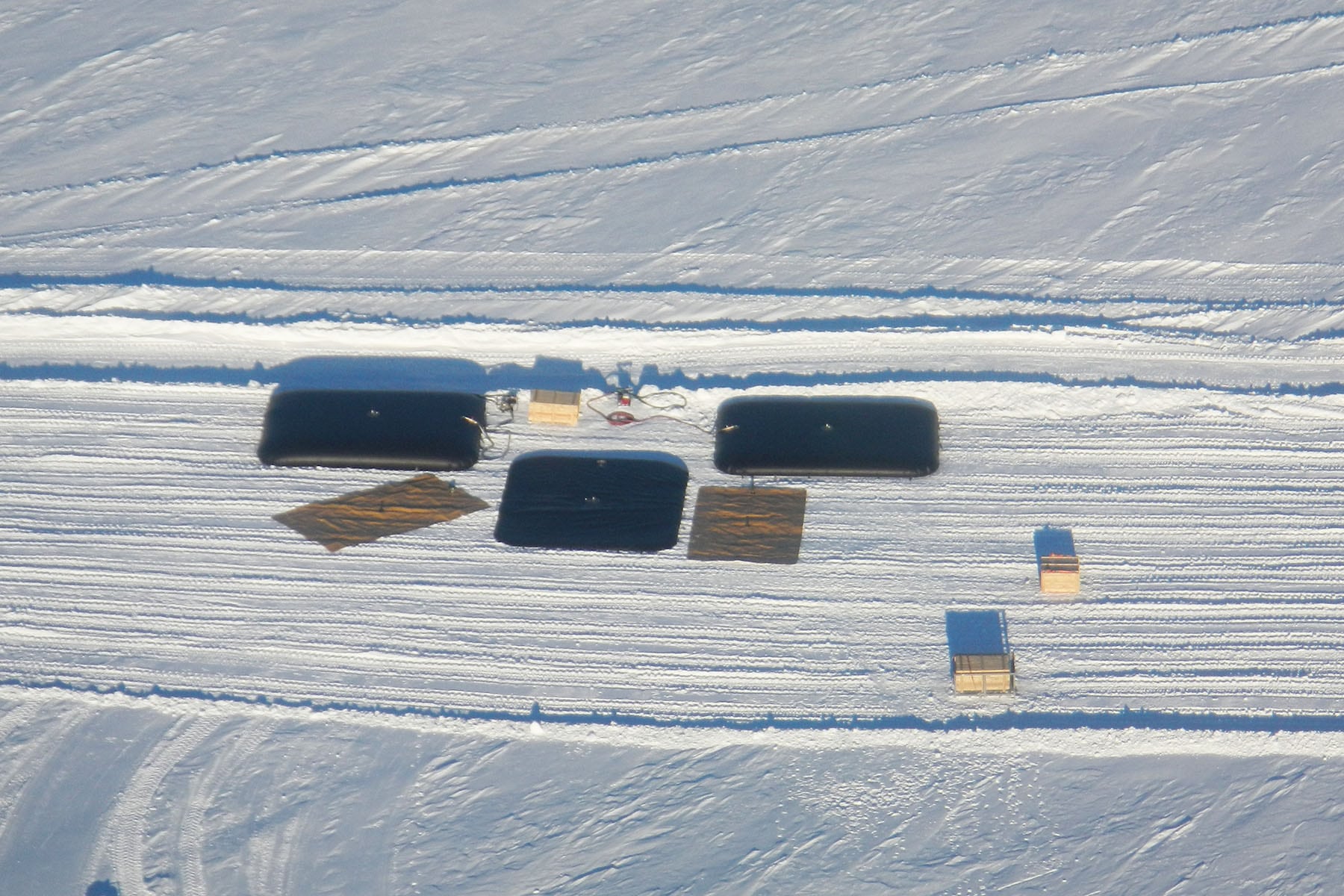
for diesel fuel between ship and shore
using Pronal flexible bladders.
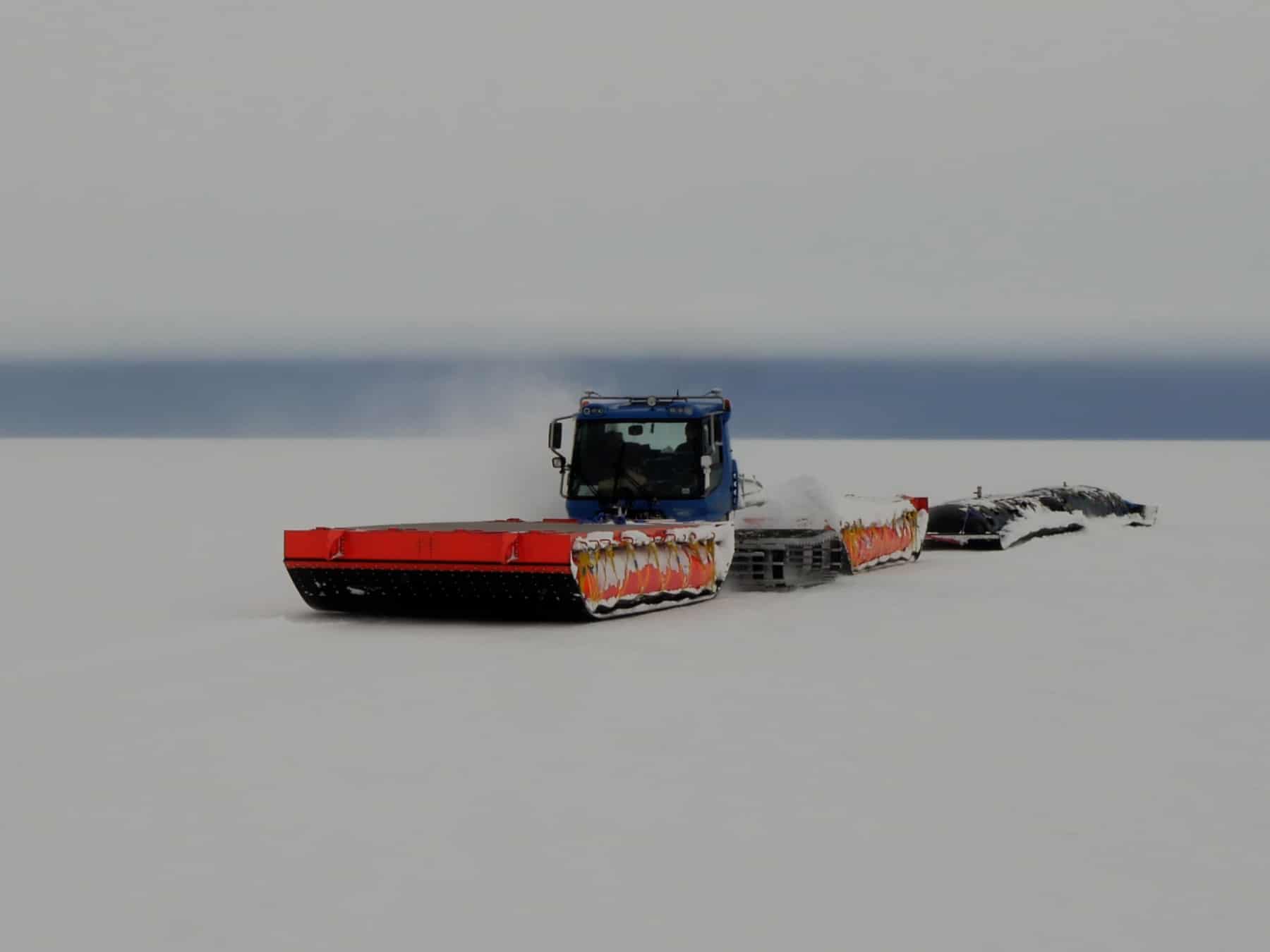
towing 2 Pronal bladders (12m³ each)
On the navigation side, the success of the operation also benefited from experience gained with the convoy equipment. Specific equipment was fitted in each vehicle, allowing the driver to work in zero-visibility conditions, particularly during periods of very heavy white-out, and also with a windscreen heavily iced over by wind-driven snow.